

Abstract oil paintings on canvas represent one of the most dynamic and expressive forms of contemporary art. These works challenge traditional representational painting by prioritizing color, form, gesture, and texture over realistic depiction. Whether you're a collector seeking your first piece or an enthusiast exploring the medium's rich history, understanding the nuances of abstract oil paintings on canvas opens doors to a deeper appreciation of modern artistic expression. The versatility of oil paint combined with canvas support creates endless possibilities for artists to communicate emotion, energy, and conceptual ideas through purely visual means.
Understanding the Foundation of Abstract Oil Painting
Abstract art emerged as a revolutionary movement in the early 20th century, fundamentally changing how artists approached their craft. Abstract art broke free from the constraints of realistic representation, allowing painters to explore pure visual language. Oil paint became the preferred medium for many abstract artists due to its unique properties and flexibility.
Why Oil Paint Excels for Abstract Work
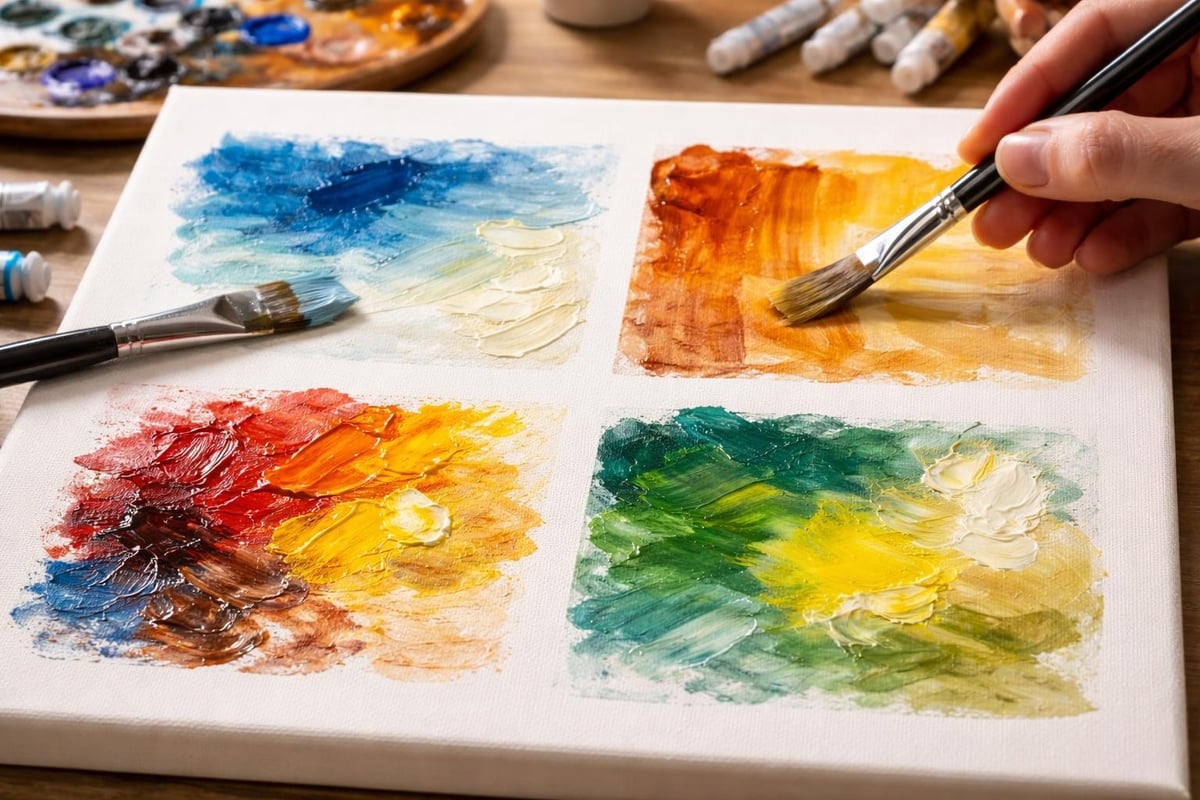
Oil paint offers several distinct advantages that make it ideal for creating abstract compositions on canvas. The slow drying time allows artists to blend colors seamlessly, create subtle gradations, and rework passages over extended periods. This extended workability enables spontaneous adjustments and complex layering techniques that would be impossible with faster-drying media.
Key benefits of oil paint for abstract work include:
- Rich, luminous color saturation that maintains vibrancy over time
- Ability to build thick, textural surfaces through impasto techniques
- Flexibility to thin paint for glazing or apply it directly from the tube
- Long-standing archival quality when properly prepared and sealed
- Capacity for both precise control and expressive spontaneity
The interaction between oil paint and canvas creates a unique surface quality. Canvas provides tooth that grips the paint, allowing for varied application methods from smooth, even layers to dramatic gestural strokes.
Historical Movements and Influential Artists
The development of abstract oil paintings on canvas spans multiple movements and generations of innovative artists. Wassily Kandinsky, often credited as one of abstract art's pioneers, created groundbreaking works like Composition VII in 1913, demonstrating how color and form could convey spiritual and emotional content without depicting recognizable objects.
Major Abstract Painting Movements
Different movements approached abstraction with varying philosophies and techniques. Abstract impressionism combined spontaneous brushwork with atmospheric color fields, while other artists pursued geometric precision or gestural energy.
| Movement | Time Period | Key Characteristics | Notable Techniques |
|---|---|---|---|
| Abstract Expressionism | 1940s-1950s | Emotional intensity, large scale | Dripping, gestural brushwork |
| Color Field Painting | 1950s-1960s | Large areas of flat color | Staining, pouring, layering |
| Geometric Abstraction | 1910s-present | Precise shapes, mathematical order | Hard edges, calculated composition |
| Lyrical Abstraction | 1960s-1970s | Intuitive, organic forms | Fluid application, soft edges |
Artists like Arthur Dove explored organic abstraction in works that referenced nature while maintaining abstract qualities. These historical precedents inform contemporary abstract oil paintings on canvas, providing a rich foundation for today's artists to build upon.
Techniques That Define Abstract Oil Painting
Creating compelling abstract oil paintings on canvas requires mastery of various technical approaches. Contemporary artists draw from a toolkit of methods developed over more than a century of abstract experimentation.
Fundamental Application Methods
- Impasto: Applying thick layers of paint to create three-dimensional texture
- Glazing: Building transparent layers that modify underlying colors
- Scumbling: Dragging dry, broken color over dried paint layers
- Wet-on-wet: Working with fresh paint into wet layers for blended effects
- Sgraffito: Scratching through paint layers to reveal underlying colors
Each technique produces distinct visual effects. Impasto creates dramatic shadows and highlights, adding physical dimension to the canvas surface. Glazing allows artists to achieve luminous depth impossible with direct painting alone.
Palette knife work has become particularly popular in abstract painting. This tool enables artists to spread, scrape, and shape paint in ways that brushes cannot replicate, creating sharp edges, smooth gradients, or rough, architectural surfaces.
Contemporary artists often combine multiple approaches within single works. This technical layering mirrors the conceptual complexity that abstract oil paintings on canvas can communicate.
Selecting and Preparing Canvas for Abstract Work
The canvas support plays a crucial role in the final appearance and longevity of abstract oil paintings. Artists must consider several factors when choosing materials for their work.
Canvas Types and Their Properties
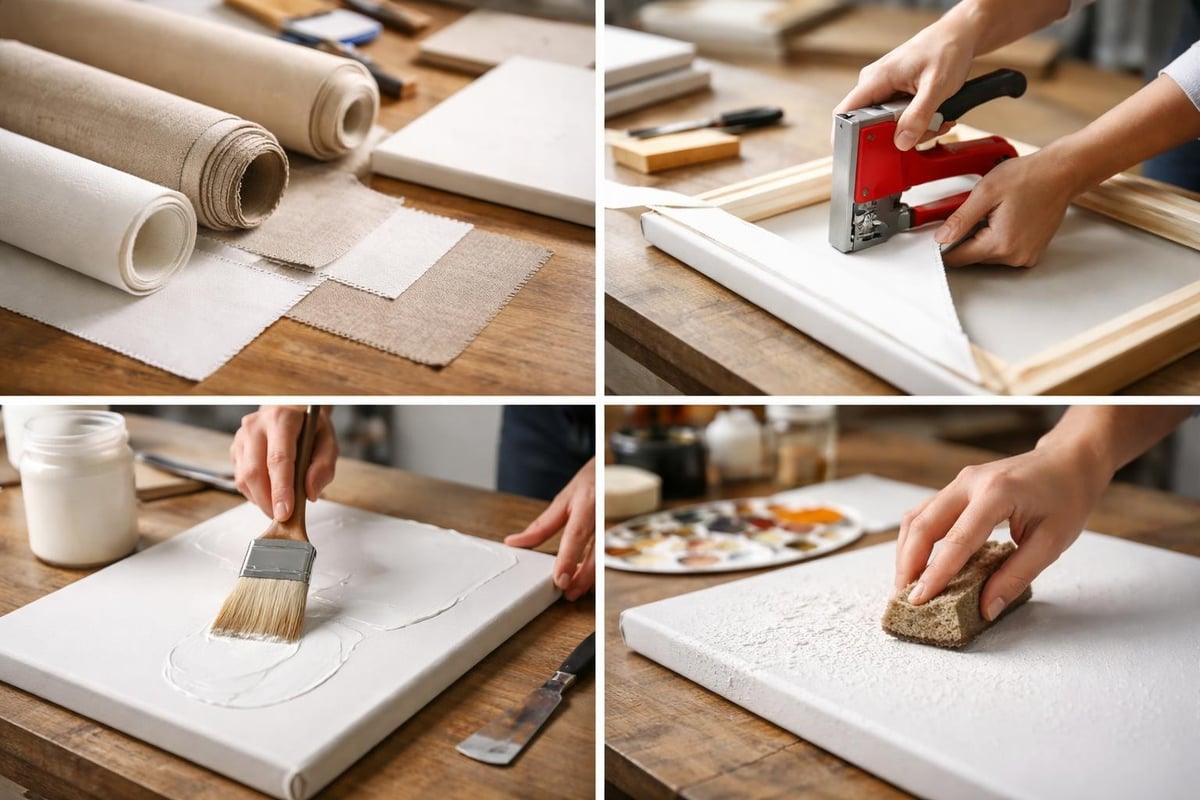
Different canvas materials offer distinct working characteristics. Linen canvas provides a smooth, tight weave preferred by many professional artists for its durability and refined surface. Cotton canvas offers a more affordable alternative with good structural integrity, though it typically has a more pronounced texture.
- Linen: Superior strength, minimal stretching, smooth surface
- Cotton: Cost-effective, readily available, moderate texture
- Synthetic: Dimensional stability, consistent weave, modern option
Proper preparation ensures paint adhesion and prevents deterioration. Traditional gesso priming creates a receptive surface that prevents oil absorption into raw fibers while providing ideal tooth for paint application.
Color Theory in Abstract Composition
Abstract oil paintings on canvas rely heavily on sophisticated color relationships to create visual impact and emotional resonance. Without representational content to guide composition, color becomes a primary communicative tool.
Building Effective Color Schemes
Understanding color theory fundamentals enables artists to construct harmonious or intentionally discordant palettes. Complementary colors create vibrant contrast, while analogous schemes produce subtle, cohesive effects. Temperature relationships between warm and cool hues generate spatial depth and emotional tone.
Strategic color choices include:
- High-contrast combinations for dramatic visual tension
- Monochromatic variations for unified, sophisticated statements
- Triadic schemes for balanced complexity
- Split-complementary approaches for nuanced contrast
Many abstract artists develop signature palettes that become recognizable elements of their style. These color signatures help establish artistic identity while providing continuity across body of work.
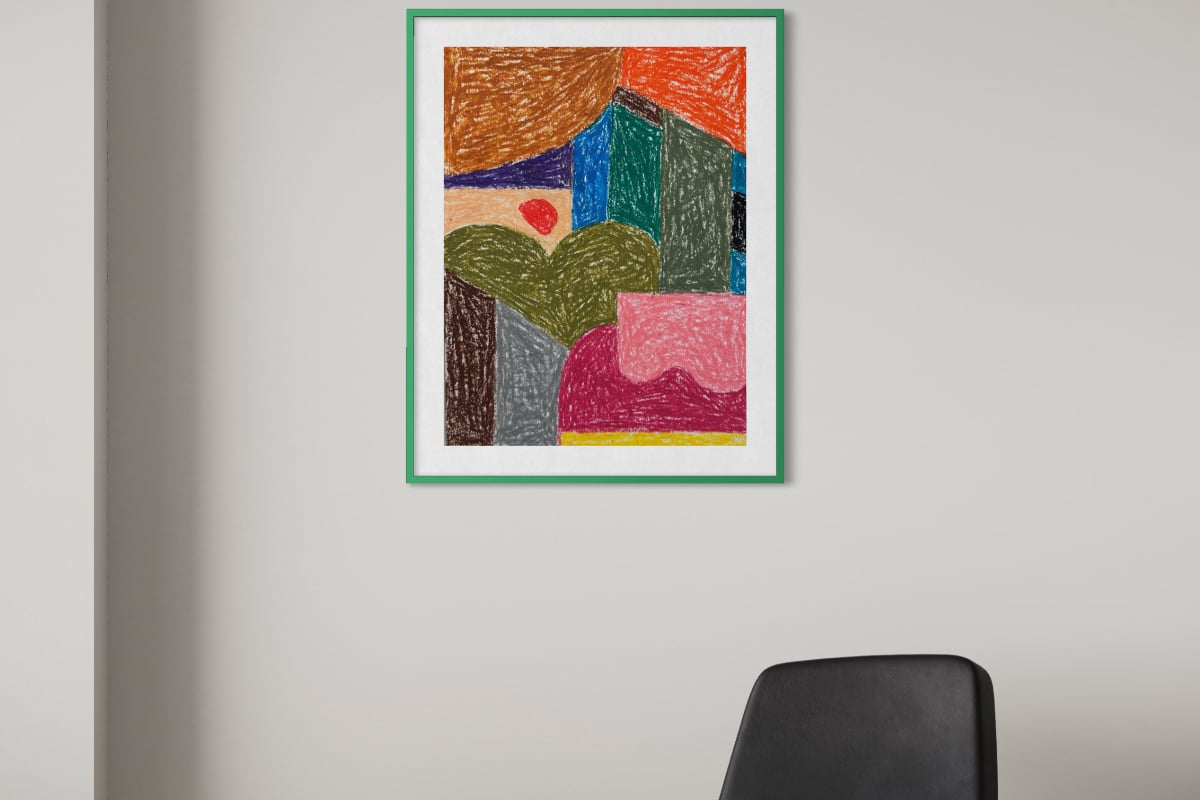
Contemporary artists like those exploring chromatic architecture demonstrate how layered geometric forms combined with deliberate color choices create balance and tension simultaneously. Works such as the chromatic study 8.5x11 showcase how oil-based media on paper can achieve similar conceptual depth as traditional canvas works, using vibrant yellows, blues, and pinks to explore spatial relationships through pure color interaction.
Composition Strategies for Non-Representational Work
Creating compelling compositions without relying on recognizable subjects requires different approaches than traditional painting. Abstract oil paintings on canvas succeed through careful consideration of visual elements and their relationships.
Balancing Visual Weight and Movement
Composition in abstract work involves distributing visual interest across the canvas surface. Artists manipulate shape, line, texture, and color to create pathways for the viewer's eye. Asymmetrical balance often produces more dynamic results than symmetrical arrangements.
Compositional techniques include:
- Rule of thirds application for focal point placement
- Diagonal lines for movement and energy
- Repetition and variation for rhythm
- Negative space manipulation for breathing room
- Scale contrast for emphasis and hierarchy
The Abstract Imagists developed unique compositional approaches that balanced geometric precision with organic elements, demonstrating how structure and spontaneity can coexist within abstract frameworks.
Texture and Surface Quality
Physical texture distinguishes abstract oil paintings on canvas from other artistic media. The tactile dimension adds another layer of visual interest and can dramatically affect how viewers experience the work.
Creating and Controlling Texture
Artists employ various materials and techniques to build surface variation. Sand, pumice, or modeling paste mixed with paint creates gritty, rough surfaces. Conversely, careful brushwork or palette knife application produces smooth, polished finishes.
| Texture Type | Creation Method | Visual Effect | Best For |
|---|---|---|---|
| Smooth | Blended brushwork, glazing | Refined, contemplative | Color field work |
| Rough | Sand additives, stippling | Raw, energetic | Expressive pieces |
| Mixed media | Collage, embedded materials | Complex, layered | Conceptual work |
| Impasto | Thick direct application | Dimensional, sculptural | Gestural abstraction |
Light interaction with textured surfaces creates shadow play that changes throughout the day. This temporal quality means the painting offers different experiences depending on lighting conditions, adding depth to the viewing experience.
Collecting Abstract Oil Paintings on Canvas
Building a collection of abstract oil paintings on canvas requires knowledge beyond aesthetic preference. Understanding quality markers, authentication, and value factors helps collectors make informed decisions.
Evaluating Quality and Authenticity
Quality in abstract work manifests through technical execution, conceptual coherence, and material integrity. Examine surface quality for consistent paint application, appropriate varnishing, and proper canvas tension. Original works should show natural variations in brushwork or technique that distinguish them from reproductions.
- Inspect signature and dating for authenticity verification
- Request certificates of authenticity from galleries or artists
- Examine edges and reverse side for construction quality
- Assess color vibrancy and surface condition
- Research artist provenance and exhibition history
Emerging artists often offer compelling work at accessible prices. Platforms like Nathalie Chikhi provide direct access to original artworks, allowing collectors to build relationships with artists while acquiring distinctive pieces.
Display and Preservation Considerations
Proper display and care ensure abstract oil paintings on canvas maintain their visual impact and structural integrity over time. Environmental factors significantly affect longevity and appearance.
Optimal Display Conditions
Environmental requirements include:
- Stable temperature between 65-75°F
- Relative humidity maintained at 40-55%
- Protection from direct sunlight to prevent fading
- Adequate air circulation to prevent moisture buildup
- Distance from heating vents and exterior walls
Lighting dramatically affects how viewers perceive abstract work. Natural north-facing light provides consistent illumination without harsh directional shadows. Artificial lighting should use full-spectrum bulbs positioned to minimize glare on textured surfaces.
Framing decisions depend on the work's style and the artist's intent. Many contemporary abstract paintings feature painted edges designed for frameless display, allowing the work to exist as an object rather than a window into represented space.
Scale and Spatial Relationships
The physical dimensions of abstract oil paintings on canvas significantly influence their impact and appropriate placement. Scale affects viewing experience, emotional intensity, and spatial integration.
Choosing Appropriate Sizes
Small-scale works invite intimate viewing and detailed examination. These pieces work well in personal spaces where viewers can approach closely. Medium-sized canvases offer versatility, fitting various residential and commercial environments while maintaining visual presence.
Large-scale abstract paintings create immersive experiences that can dominate architectural spaces. These works often employ bold gestures and simplified forms that read clearly from distance while offering complexity upon closer inspection.
Size considerations for different spaces:
- Residential living rooms: 36x48 inches to 60x72 inches
- Dining areas: 24x36 inches to 40x50 inches
- Bedrooms: 20x24 inches to 36x48 inches
- Corporate lobbies: 60x84 inches and larger
- Intimate studies: 11x14 inches to 20x24 inches
Contemporary paintings collections demonstrate how diverse scales serve different aesthetic and functional purposes, from statement pieces to subtle accents.
Contemporary Trends and Innovations
The field of abstract oil paintings on canvas continues evolving as contemporary artists push boundaries while honoring historical precedents. Current trends reflect both technological advances and renewed interest in traditional craftsmanship.
Current Directions in Abstract Painting
Minimalist approaches emphasizing restraint and reduction remain influential. These works strip composition to essential elements, creating contemplative spaces through limited palettes and simplified forms. Conversely, maximalist abstraction layers complex information, creating dense visual fields that reward extended viewing.
Emerging trends include:
- Hybrid techniques combining traditional oil with mixed media
- Digital-inspired compositions referencing screen culture
- Eco-conscious materials addressing sustainability concerns
- Cross-cultural fusion incorporating global aesthetic traditions
- Installation-based approaches expanding beyond single canvas format
Artists increasingly blur boundaries between abstraction and representation, creating works that suggest recognizable elements while maintaining abstract integrity. This approach acknowledges contemporary viewers' sophisticated visual literacy developed through constant image exposure.
Investment and Market Considerations
Abstract oil paintings on canvas occupy significant positions in both primary and secondary art markets. Understanding market dynamics helps collectors make strategic acquisition decisions.
Factors Affecting Value
Multiple elements influence artwork value beyond pure aesthetic merit. Artist reputation, exhibition history, critical reception, and market demand all contribute to pricing. Works by established artists with museum representation command premium prices, while emerging artists offer growth potential.
Provenance documentation proves ownership history and authenticity, significantly affecting resale value. Original receipts, gallery certificates, and exhibition records establish clear provenance chains that reassure future buyers.
Value indicators include:
- Artist's exhibition record at recognized institutions
- Inclusion in public or corporate collections
- Critical reviews in established art publications
- Consistent auction results showing market stability
- Technical quality and preservation condition
Acquiring directly from artists or their representatives often provides best value while supporting creative practice. Many artists maintain online galleries where collectors can view available works and commission custom pieces.
Care and Maintenance Essentials
Preserving abstract oil paintings on canvas requires minimal but consistent attention. Proper maintenance prevents deterioration and maintains aesthetic qualities decades beyond creation.
Routine Care Practices
Dust accumulation dulls surface appearance and can scratch varnish layers. Gently dust paintings quarterly using soft, natural-bristle brushes or microfiber cloths. Never apply pressure that might damage textured surfaces or loosen paint layers.
Professional cleaning becomes necessary when surface dirt resists gentle dusting. Conservators use specialized techniques and materials safe for oil paintings. Attempting aggressive cleaning without expertise risks irreversible damage.
Maintenance schedule recommendations:
- Monthly: Visual inspection for changes or damage
- Quarterly: Gentle dusting with appropriate materials
- Annually: Professional assessment for valuable works
- As needed: Conservation treatment for damage or deterioration
- Every 50-100 years: Varnish removal and replacement by conservators
Climate control remains the most important preservation factor. Fluctuating temperature and humidity cause canvas expansion and contraction, potentially leading to paint cracking or delamination.
Building Personal Connections with Abstract Art
Abstract oil paintings on canvas offer unique opportunities for personal interpretation and emotional connection. Without predetermined narrative content, viewers bring their own experiences and associations to these works.
Developing Your Eye for Abstraction
Engaging meaningfully with abstract art requires openness to subjective experience. Rather than seeking to "understand" what paintings represent, focus on direct sensory and emotional responses. Notice how color combinations affect mood, how textures suggest tactile experiences, or how compositions create movement sensations.
Repeated viewing reveals layers of complexity not apparent initially. Abstract paintings reward sustained attention, offering new discoveries with each encounter. This evolving relationship differs fundamentally from representational art, where meaning often crystallizes quickly.
Visiting exhibitions, reading artist statements, and exploring different abstract movements builds visual vocabulary and contextual understanding. Resources examining works like Kandinsky's Sky Blue demonstrate how formal analysis deepens appreciation.
Abstract oil paintings on canvas continue captivating collectors and enthusiasts through their powerful combination of technical mastery, emotional expressiveness, and visual innovation. Whether you're drawn to bold gestural works or subtle color field compositions, understanding the medium's rich history and technical foundations enhances every viewing experience. Explore distinctive abstract works that bring chromatic energy and conceptual depth to your space through Nathalie Chikhi, where original paintings and prints reflect thoughtful exploration of color, form, and spatial relationships.
