

The role of a designing artist has evolved considerably in recent years, merging traditional artistic skills with contemporary design thinking and strategic presentation. Unlike artists who focus solely on creation or designers who work primarily within commercial constraints, a designing artist operates at the intersection of both disciplines. This professional identity requires mastering technical execution, developing a distinctive visual language, and understanding how to package creative work for specific audiences. Whether you create abstract compositions, figurative paintings, or experimental media, approaching your practice with design consciousness elevates both the work itself and how it connects with collectors and viewers.
Understanding the Designing Artist Identity
A designing artist brings intentionality to every aspect of their creative practice. This extends beyond the artwork itself to encompass how pieces relate to one another, how they're presented, and how they communicate broader themes or concepts.
The distinction lies in purposeful decision-making. While spontaneity and intuition remain vital, a designing artist also considers composition systematically, explores color relationships through structured experimentation, and develops bodies of work that demonstrate cohesive thinking. This approach doesn't diminish artistic freedom but rather enhances it through framework and clarity.
Core Competencies for Success
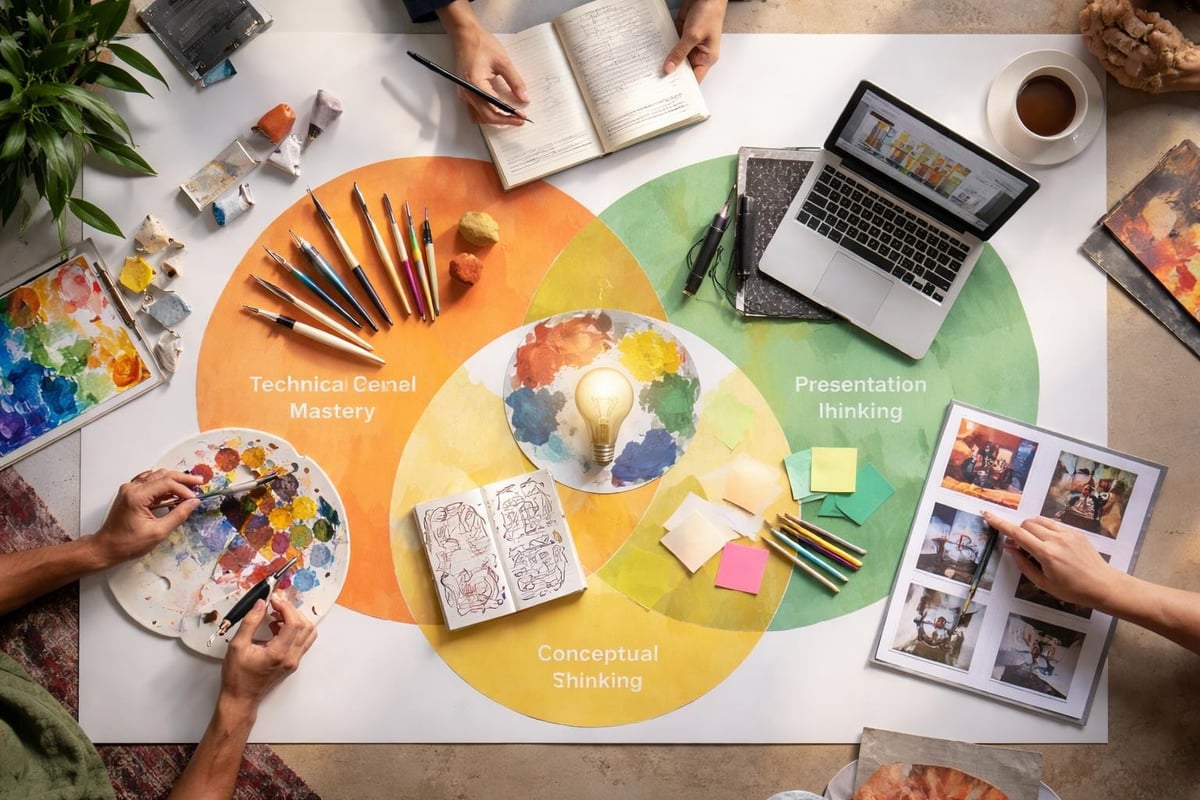
Developing as a designing artist requires cultivating several interconnected skills:
- Visual literacy and compositional mastery across multiple mediums
- Color theory application that goes beyond basic harmony
- Conceptual development that ties individual pieces to larger themes
- Technical proficiency in chosen materials and processes
- Critical self-assessment for continuous improvement
- Presentation skills for both physical and digital contexts
These competencies work together to create a professional foundation. Technical skill without conceptual depth produces work that may be well-executed but forgettable. Conversely, strong concepts poorly executed fail to realize their full potential.
Building a Compelling Portfolio Strategy
Your portfolio represents your professional identity as a designing artist. It should communicate not just what you've created but how you think, solve visual problems, and develop ideas across multiple works.
Quality consistently outweighs quantity in portfolio development. Presenting fifteen exceptional pieces that demonstrate range and depth proves far more effective than fifty works of varying quality. Each included piece should justify its presence by contributing something unique to the overall narrative you're constructing about your practice.
Curating for Impact
Strategic curation transforms a collection of works into a cohesive story. Consider these approaches:
- Organize by theme or series to show conceptual development
- Demonstrate technical range without sacrificing coherence
- Include process documentation for complex pieces
- Update regularly to reflect current direction
- Remove weaker work even if you're personally attached to it
According to comprehensive portfolio guidance for designers, explaining your design thinking matters as much as showing finished work. For a designing artist, this means contextualizing pieces within your creative process and conceptual framework.
Digital Presentation Standards
In 2026, your online portfolio serves as the primary introduction to your work for most viewers. Professional presentation includes:
| Element | Standard | Purpose |
|---|---|---|
| Image Resolution | Minimum 2000px longest side | Clear detail viewing |
| Color Accuracy | Calibrated, consistent | True representation |
| File Format | JPEG for paintings, PNG for graphics | Optimal quality and loading |
| Metadata | Title, medium, dimensions, year | Professional documentation |
| Navigation | Intuitive, mobile-responsive | Accessibility across devices |
High-resolution photography captures the subtleties that make your work distinctive. Proper lighting eliminates color casts and preserves accurate tonal relationships. Effective portfolio presentation strategies emphasize that technical quality in documentation reflects the professionalism of your practice.
Developing Cohesive Series and Collections
Working in series distinguishes a designing artist from someone creating isolated pieces. Series development demonstrates your ability to explore concepts thoroughly, establish visual consistency, and create bodies of work that collectors can engage with more deeply.
A well-conceived series balances repetition and variation. Consistent elements-color palettes, compositional structures, thematic concerns-create recognizable continuity. Variations within that framework keep individual pieces fresh and prevent monotony.
Thematic Exploration Methods
Strong series emerge from sustained investigation of specific ideas. Consider how chromatic architecture explores the intersection of color relationships and geometric structure, or how counterform investigates negative space as primary compositional element.
Begin series development by identifying a question or concept worth extended exploration:
- How do warm and cool colors interact within geometric constraints?
- What visual tensions emerge from contrasting organic and angular forms?
- How can layering create spatial ambiguity while maintaining compositional clarity?
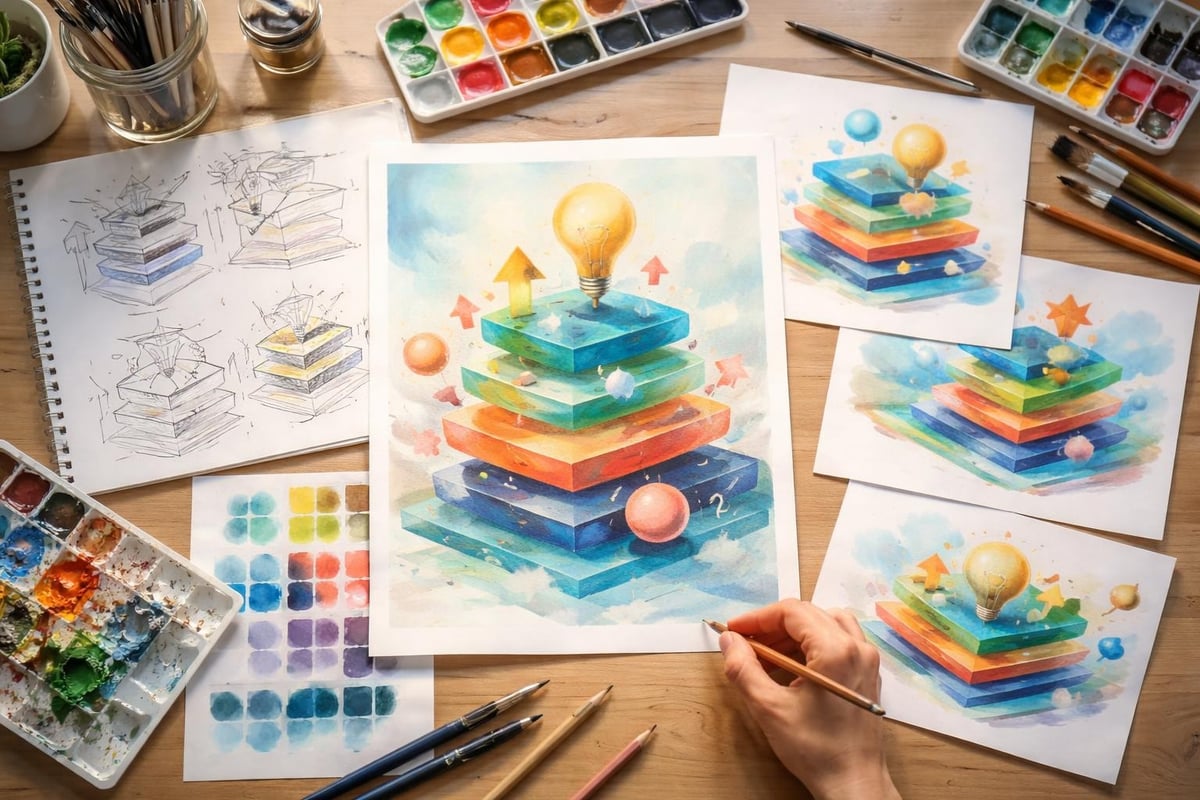
Document your exploration through sketches, color studies, and experimental pieces before committing to larger works. This preparatory work often reveals unexpected directions and prevents series from becoming formulaic.
Creating Visual Consistency
Consistency doesn't mean uniformity. A designing artist maintains recognizable elements while allowing sufficient variation to keep work engaging:
- Material consistency: Using similar substrates, papers, or canvases across a series
- Scale relationships: Establishing size parameters that work individually and as installations
- Color palette boundaries: Defining but not rigidly limiting chromatic range
- Compositional principles: Applying consistent structural approaches with varied application
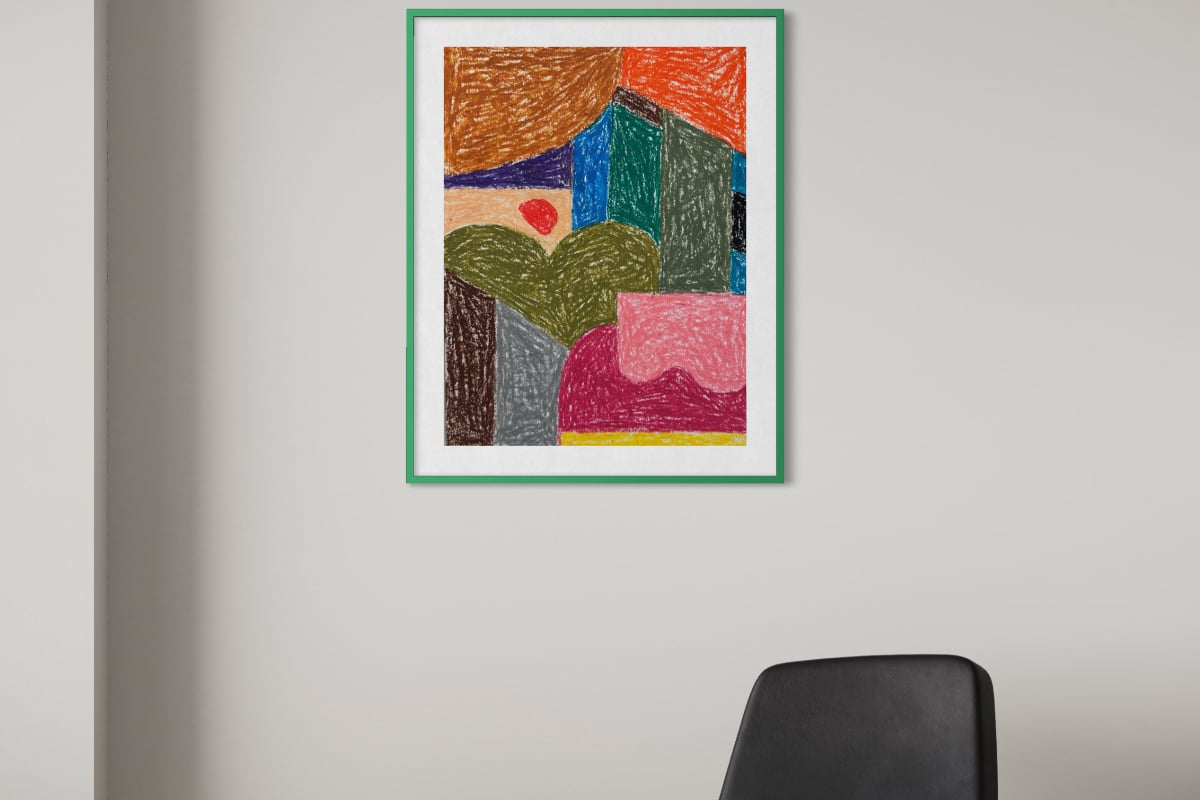
For instance, working with oil pastel on archival paper establishes material consistency while allowing unlimited chromatic and compositional exploration. The Chromatic Study series demonstrates how one-of-a-kind compositions can explore balance and tension through layered geometry while maintaining series cohesion through shared materials and conceptual framework.
Establishing Your Visual Identity
A designing artist cultivates a recognizable visual language that makes their work identifiable even without a signature. This doesn't happen through conscious imitation or forced style development but emerges organically from your interests, influences, and repeated choices.
Your visual identity encompasses multiple elements working in concert. Color preferences often emerge first-perhaps a tendency toward saturated hues, muted tones, or specific harmonic relationships. Compositional tendencies follow: balanced or asymmetric arrangements, geometric or organic structures, dense or spacious compositions.
Influences and Originality
Every designing artist builds on existing visual traditions while developing unique perspectives. Study outstanding portfolio examples to understand how established artists balance influence and innovation.
Acknowledge your influences openly:
- Identify artists whose work resonates with your sensibilities
- Analyze what specifically draws you to their approach
- Extract principles rather than copying aesthetics
- Apply those principles to your own questions and concepts
- Synthesize multiple influences into something distinctly yours
This process creates work that demonstrates awareness of artistic traditions while maintaining individual voice.
Signature Elements Without Repetition
Developing signature elements provides consistency without creative stagnation. These might include:
| Element Type | Example | Application |
|---|---|---|
| Mark-making | Specific gesture or line quality | Appears across different compositions |
| Spatial treatment | Particular approach to depth/flatness | Consistent but variably applied |
| Material handling | Distinctive technique with chosen medium | Recognizable execution |
| Conceptual concern | Recurring themes or questions | Explored through different approaches |
The key is maintaining these elements while preventing them from becoming clichés in your own work. Conscious evolution keeps signature elements fresh rather than formulaic.
Documentation and Professional Presentation
Professional documentation separates serious designing artists from hobbyists. Quality photography, accurate descriptions, and thorough archiving create credibility and facilitate sales, exhibitions, and commissions.
Invest in proper documentation equipment or services. Natural lighting works well for photographing paintings, while controlled studio lighting better serves three-dimensional work. Consistency in documentation style presents your portfolio professionally.
Cataloging Your Work
Maintain detailed records for every piece:
- Unique identifier or inventory number
- Title reflecting conceptual intentions
- Date of completion
- Medium and materials with specific product details when relevant
- Dimensions in consistent units
- Edition information for prints or multiples
- Provenance tracking ownership history
- Exhibition history documenting where pieces have shown
- Publication record if work appears in media
This information proves essential for insurance, authentication, and professional opportunities. Digital asset management systems organize these records efficiently while allowing quick retrieval.
Writing About Your Work
Articulate descriptions enhance viewer engagement without over-explaining or limiting interpretation. According to strategies for standout portfolios, effective artist statements balance accessibility and depth.
Write descriptions that:
- Provide context without dictating meaning
- Explain technical processes when relevant to understanding
- Connect individual pieces to larger series or concepts
- Use precise language avoiding artspeak clichés
- Remain concise while being substantive
Practice describing your work to diverse audiences. Adjust technical detail and conceptual explanation based on viewer familiarity with contemporary art practices.
Pricing and Valuing Your Work
Establishing appropriate prices challenges many designing artists, but strategic pricing supports sustainable practice. Underpricing devalues your work and makes price increases difficult. Overpricing relative to your career stage and market position limits sales and collector development.
Consider multiple factors in pricing decisions:
- Material costs including quality supplies and archival materials
- Time investment reflecting both execution and development
- Skill level acknowledging years of practice and refinement
- Size and complexity of individual pieces
- Market positioning relative to artists at similar career stages
- Overhead expenses including studio, documentation, and marketing
- Edition size for prints and multiples
Pricing Structures That Work
Consistent pricing structures build collector confidence. Establish clear relationships between size, medium, and price:
| Size Category | Original Works | Limited Edition Prints |
|---|---|---|
| Small (under 12") | $300-800 | $75-150 |
| Medium (12-24") | $800-2000 | $150-350 |
| Large (24-40") | $2000-5000 | $350-750 |
| Monumental (40"+) | $5000+ | $750+ |
These ranges vary considerably based on medium, career stage, and market. Research comparable artists through gallery websites and art fairs to establish appropriate positioning.
Justify premium pricing through documentation quality, presentation standards, and professional practices. Collectors pay more confidently when purchasing from artists who demonstrate career seriousness through every interaction.
Marketing and Audience Development
A designing artist in 2026 must actively cultivate audience relationships rather than waiting for discovery. Strategic marketing balances creating work, building visibility, and engaging with potential collectors.
Effective marketing begins with identifying your ideal audience. Who naturally gravitates toward your aesthetic? What values, interests, or design sensibilities do they hold? Understanding your audience informs where and how you present work.
Platform Selection and Strategy
Choose platforms aligned with your work and audience:
- Instagram: Visual storytelling and behind-the-scenes content
- Website/Shop: Professional hub for original artworks and prints
- Email Newsletter: Direct communication with committed followers
- Pinterest: Discovery for specific design aesthetics
- LinkedIn: Professional network for corporate commissions
Maintain consistent presence without exhausting yourself across too many channels. Better to excel on two platforms than maintain mediocre presence on five.
Create content that extends beyond finished work promotion:
- Process documentation showing development stages
- Studio insights humanizing your practice
- Concept exploration discussing ideas informing work
- Material discussions explaining choices and techniques
- Collection styling demonstrating how pieces work in spaces
This varied content maintains engagement between major work releases while educating your audience about your practice.

Building Collector Relationships
Sustainable practices rest on collector relationships extending beyond single transactions. Nurture these connections through:
- Personalized communication acknowledging specific interests
- Early access to new work for established collectors
- Transparent processes around commissions and custom work
- Professional follow-up after purchases
- Invitations to studio visits or virtual previews
Collectors who feel personally connected to your practice become advocates, recommending your work within their networks and returning for additional purchases.
Commission Work and Custom Projects
Custom commissions provide income while challenging you to work within external parameters. A designing artist approaches commissions as collaborative opportunities rather than artistic compromises.
Establish clear commission processes protecting both parties. Detail these expectations in written agreements covering scope, timeline, payment terms, and revision policies. Clarity prevents misunderstandings that damage relationships and reputation.
Commission Workflow Best Practices
Structure commission projects in defined stages:
- Initial consultation understanding vision and requirements
- Concept development with sketches or mockups
- Approval checkpoint confirming direction before execution
- Creation phase with progress updates
- Final review allowing minor adjustments
- Delivery and installation support when applicable
This staged approach manages expectations while protecting your creative process from endless revisions. Specify included revision rounds upfront, charging for additional changes beyond agreement.
Price commissions appropriately, typically 25-50% above comparable existing work prices. Commission premiums reflect the customization work, client communication time, and opportunity cost of not creating inventory pieces.
Professional Development and Growth
Continuous improvement distinguishes designing artists who build sustainable careers from those who plateau. Dedicate time to skill development, conceptual expansion, and professional knowledge advancement.
Regular skill-building maintains creative momentum:
- Technical workshops in new materials or methods
- Life drawing sessions strengthening foundational skills
- Museum and gallery visits studying historical and contemporary work
- Art book study examining reproductions with analytical attention
- Online courses accessing specialized instruction
- Artist residencies providing focused creation time
Balance skill development with conceptual growth. Read broadly beyond art-philosophy, science, design theory, cultural criticism-to deepen conceptual sophistication informing your work.
Measuring Progress Strategically
Track development through concrete metrics beyond subjective assessment:
| Metric Category | Specific Measurements | Review Frequency |
|---|---|---|
| Technical skill | Execution quality ratings 1-10 | Quarterly |
| Series completion | Works finished per series | Monthly |
| Portfolio growth | Strong pieces added | Quarterly |
| Market development | Sales, inquiries, followers | Monthly |
| Exhibition activity | Applications, acceptances, shows | Annually |
Regular assessment reveals patterns in productivity, identifies areas needing attention, and documents progression over time. Creating exceptional portfolios requires honest evaluation and continuous refinement.
Exhibition Opportunities and Visibility
Strategic exhibition participation builds credibility and expands audience reach. A designing artist selects opportunities aligned with career goals rather than applying indiscriminately.
Research venues thoroughly before applying. Consider:
- Audience alignment: Does the venue attract collectors for your work?
- Professional reputation: How is the space regarded within the art community?
- Exhibition quality: Do previous shows demonstrate curatorial rigor?
- Terms and costs: What fees, commissions, or expenses apply?
- Timing: Does the opportunity fit your production and career timeline?
Focus on opportunities providing genuine visibility rather than vanity exhibitions offering little beyond resume lines. Quality venues with engaged audiences prove more valuable than numerous shows in poorly-attended spaces.
Alternative Exhibition Models
Traditional gallery representation isn't the only path to visibility. Alternative approaches include:
- Artist-run spaces offering community and flexibility
- Pop-up exhibitions creating urgency and exclusivity
- Virtual galleries expanding geographic reach
- Art fairs concentrating collector audiences
- Open studio events providing direct artist-collector interaction
- Corporate installations securing commissions and exposure
Combine approaches strategically rather than pursuing single paths exclusively. Diversified visibility creates multiple revenue streams and audience touchpoints.
Balancing Creation and Business
The designing artist navigates constant tension between studio time and business activities. Both require attention, yet creating work must remain central to sustainable practice.
Establish clear boundaries protecting creation time. Schedule specific hours for administrative tasks, marketing, and business development rather than allowing them to intrude randomly throughout your week.
Typical weekly allocation might include:
- 50-60%: Studio production time
- 15-20%: Marketing and social media
- 10-15%: Business administration
- 10-15%: Professional development
- 5-10%: Networking and relationship building
Adjust these ratios based on career stage and specific needs. New practices require heavier marketing investment, while established artists shift more time to creation.
Systems for Efficiency
Implementing efficient systems reclaims time for creative work:
- Batch similar tasks rather than constant context-switching
- Automate routine processes through scheduling and templates
- Delegate when possible hiring help for tasks outside core competencies
- Set boundaries protecting studio time from interruptions
- Review regularly identifying and eliminating time-wasting activities
Technology enables many efficiencies, from automated social posting to inventory management systems. Invest time establishing systems that create ongoing time savings.
Developing as a designing artist requires balancing creative vision with professional practices, technical mastery with conceptual depth, and artistic freedom with strategic thinking. The most successful practitioners in 2026 understand that intentional design consciousness enhances rather than constrains artistic expression. Whether you're exploring geometric abstraction, investigating color relationships, or developing entirely new visual languages, approaching your practice with both creative passion and professional structure creates the foundation for sustainable artistic careers. Nathalie Chikhi offers original artworks and prints that demonstrate how cohesive series development and chromatic exploration create distinctive visual identities, with collections spanning chromatic architecture, counterform investigations, and geometric compositions available for collectors seeking thoughtfully designed contemporary art.
