

The contemporary art world increasingly celebrates versatility and cross-disciplinary expertise. A multi artist brings diverse skills and techniques to their creative practice, working across multiple mediums, styles, or disciplines rather than specializing in a single form. This approach has gained significant momentum in 2026 as collectors, galleries, and audiences seek unique perspectives that transcend traditional artistic boundaries. Understanding what defines a multi artist and how to develop this multifaceted approach can transform both creative output and professional opportunities.
Defining the Multi Artist in Contemporary Practice
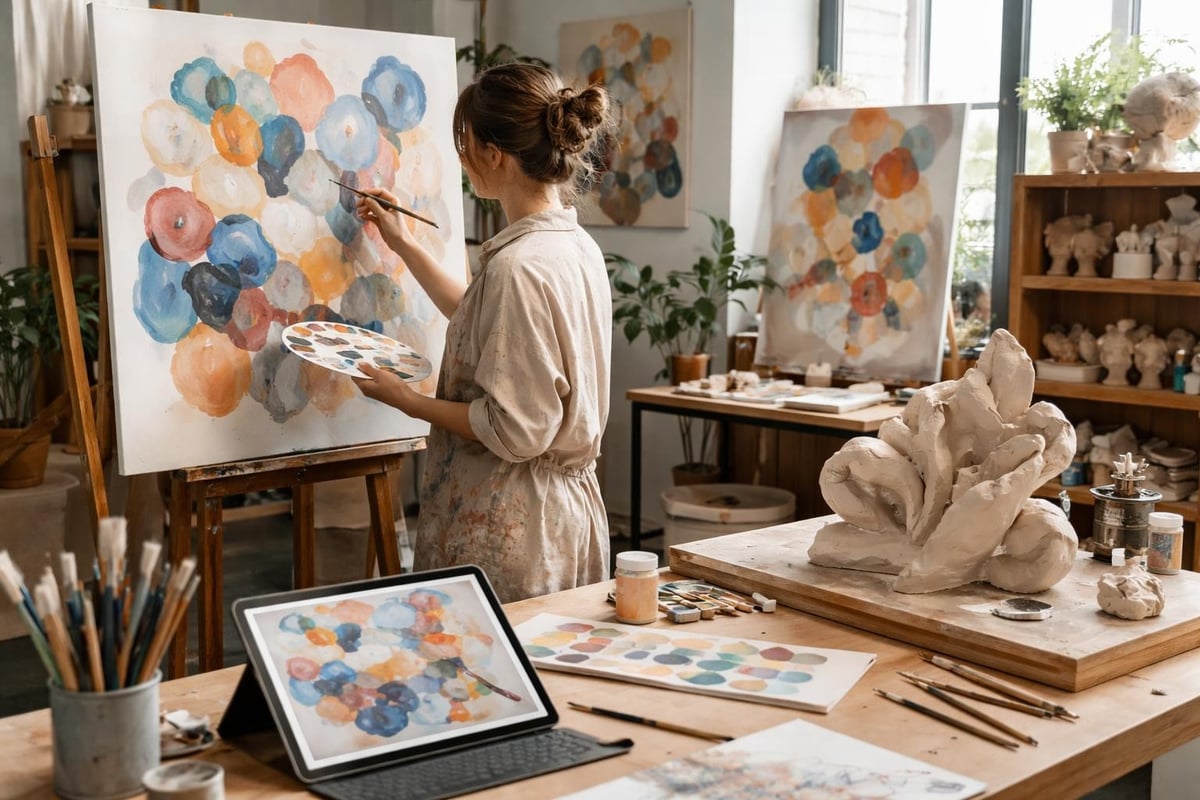
The term multi artist encompasses creators who actively work across different artistic mediums or collaborate with other artists to produce unified works. Unlike traditional specialists who focus exclusively on painting or sculpture, a multi artist might seamlessly transition between oil pastels, digital illustration, installation art, and performance. This multitalented approach reflects a broader shift in contemporary art toward interdisciplinary exploration.
What Distinguishes Multi Artist Work
Multi artist practices differ fundamentally from dabbling in various mediums without depth. True multi artist creators develop substantive expertise in each discipline they pursue, understanding the unique technical requirements, historical context, and expressive possibilities of different forms. They might create paintings on canvas one week and develop three-dimensional art objects the next, maintaining high standards across all outputs.
The distinction becomes clearer when examining professional portfolios. A multi artist showcases cohesive bodies of work in multiple mediums rather than scattered experiments. Each medium receives dedicated attention, research, and refinement. This depth across disciplines creates richer artistic vocabularies and enables unique cross-pollination between techniques.
Building Skills Across Multiple Artistic Disciplines
Developing genuine proficiency as a multi artist requires strategic skill-building rather than superficial exploration. Artists must balance breadth and depth, ensuring each medium receives adequate attention while maintaining an overarching creative vision.
Strategic Medium Selection
Choose mediums that complement rather than compete with each other. Consider these factors:
- Technical overlap: Select mediums sharing fundamental skills (color theory applies to painting, digital art, and printmaking)
- Conceptual coherence: Ensure different mediums serve unified thematic explorations
- Resource efficiency: Balance materials, workspace, and time requirements across mediums
- Market relevance: Understand collector and gallery preferences in your target markets
Artists working with chromatic architecture might extend geometric explorations from traditional painting into digital formats, installation pieces, or commissioned murals. This coherent expansion strengthens rather than dilutes the artistic identity.
Time Management for Multi-Medium Production
| Approach | Weekly Hours | Medium Focus | Benefits |
|---|---|---|---|
| Simultaneous | 20-30 | 2-3 active mediums | Maintains fresh perspective |
| Sequential | 30-40 | One medium per project cycle | Develops deep immersion |
| Hybrid | 25-35 | Primary + secondary mediums | Balances focus and variety |
Most successful multi artist creators adopt hybrid approaches, dedicating primary time to their strongest medium while reserving specific periods for secondary disciplines. This prevents creative burnout while building comprehensive portfolios.
Technical Mastery Across Mediums
Excellence as a multi artist demands technical rigor in each chosen discipline. Superficial knowledge becomes immediately apparent to informed audiences, galleries, and collectors who expect professional-level execution regardless of medium.
Foundation Skills That Transfer
Certain fundamental competencies support multi artist practices across disciplines:
- Compositional understanding: Balance, rhythm, and spatial relationships apply universally
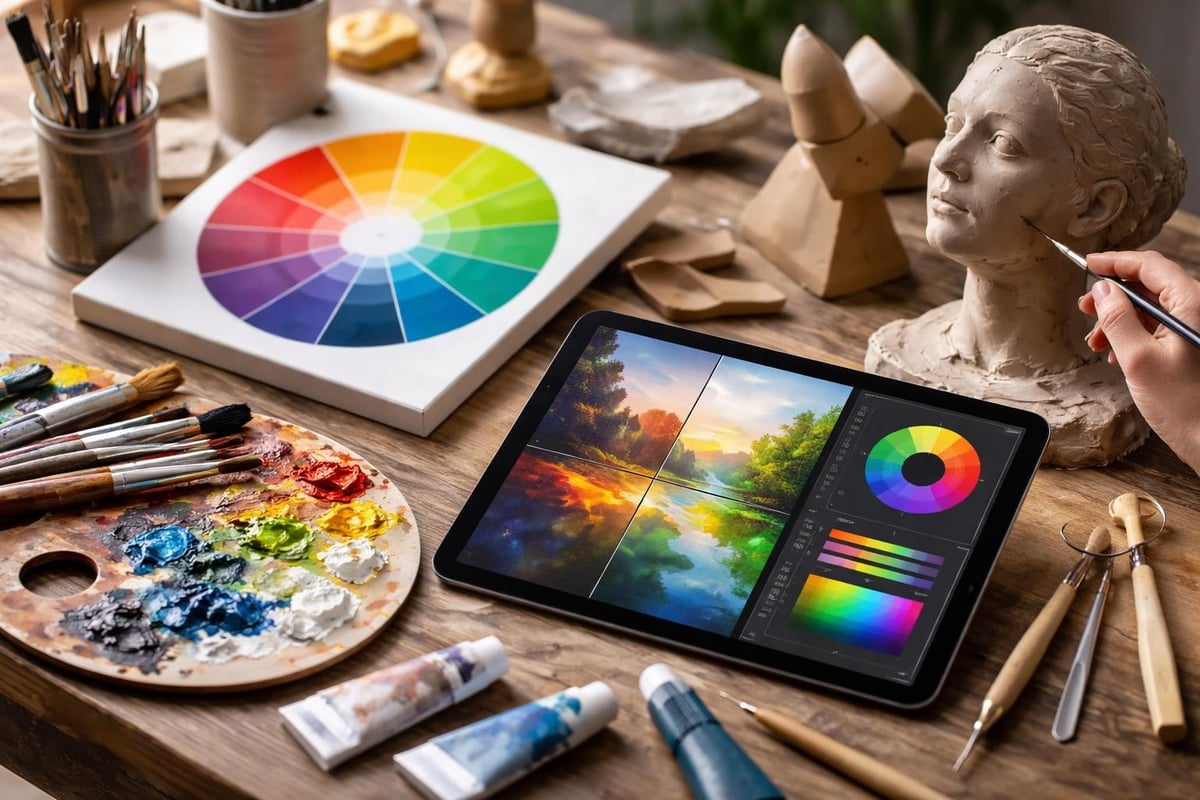
- Color theory expertise: Hue relationships, temperature, and value work across all chromatic mediums
- Mark-making proficiency: Understanding gestural versus controlled marks informs painting, drawing, and digital work
- Material science knowledge: How substances interact, layer, and age affects longevity across mediums
Artists exploring abstract compositions can apply geometric principles whether working with oil pastels on archival paper or creating large-scale murals. The conceptual framework remains consistent while technical execution adapts to each medium's requirements.
Medium-Specific Technical Development
Each artistic medium presents unique technical challenges requiring dedicated study. A multi artist working with traditional painting must understand canvas preparation, paint viscosity, drying times, and archival practices. When transitioning to sculpture or installation, entirely different technical knowledge becomes essential.
Invest in proper training for each medium through workshops, mentorships, or structured self-study. Online resources provide valuable starting points, but hands-on practice with quality materials remains irreplaceable. Budget approximately 100-200 hours of focused practice to achieve basic proficiency in a new medium, with ongoing refinement extending far beyond this initial investment.
Building Cohesive Multi Artist Portfolios
Professional presentation distinguishes accomplished multi artist creators from dilettantes. Collectors and galleries seek coherent artistic visions expressed through multiple mediums rather than scattered experimentation lacking clear direction.
Thematic Unity Across Mediums
Successful multi artist portfolios demonstrate conceptual consistency even when technical approaches vary dramatically. This might involve:
- Exploring consistent subject matter across different mediums
- Maintaining signature color palettes regardless of materials
- Investigating recurring formal concerns through varied techniques
- Developing serialized concepts that naturally extend into multiple formats
Artists working with colorful abstract art prints often maintain recognizable color relationships whether creating original paintings, limited edition prints, or commissioned pieces. This consistency builds brand recognition while showcasing technical versatility.
Portfolio Organization Strategies
| Organization Method | Best For | Considerations |
|---|---|---|
| Medium-based sections | Multi artist with distinct styles per medium | May fragment overall vision |
| Thematic collections | Conceptually driven practices | Highlights intellectual coherence |
| Chronological presentation | Demonstrating skill evolution | Shows development over time |
| Project-based groupings | Commission-focused artists | Emphasizes professional versatility |
Most effective portfolios combine organizational approaches, presenting primary work thematically while providing medium-specific subsections for deeper exploration. Digital portfolios enable this layered navigation better than traditional printed materials.
Market Positioning for Multi Artist Creators
The commercial art market responds differently to multi artist creators than single-medium specialists. Understanding these dynamics enables more effective positioning and sales strategies.
Pricing Across Different Mediums
Multi artist creators face unique pricing challenges. Original paintings command different price points than prints, digital works, or art objects. Establish clear pricing structures that:
- Reflect time investment and material costs for each medium
- Acknowledge market expectations for different formats
- Maintain internal consistency across comparable works
- Scale appropriately with size, edition numbers, and complexity
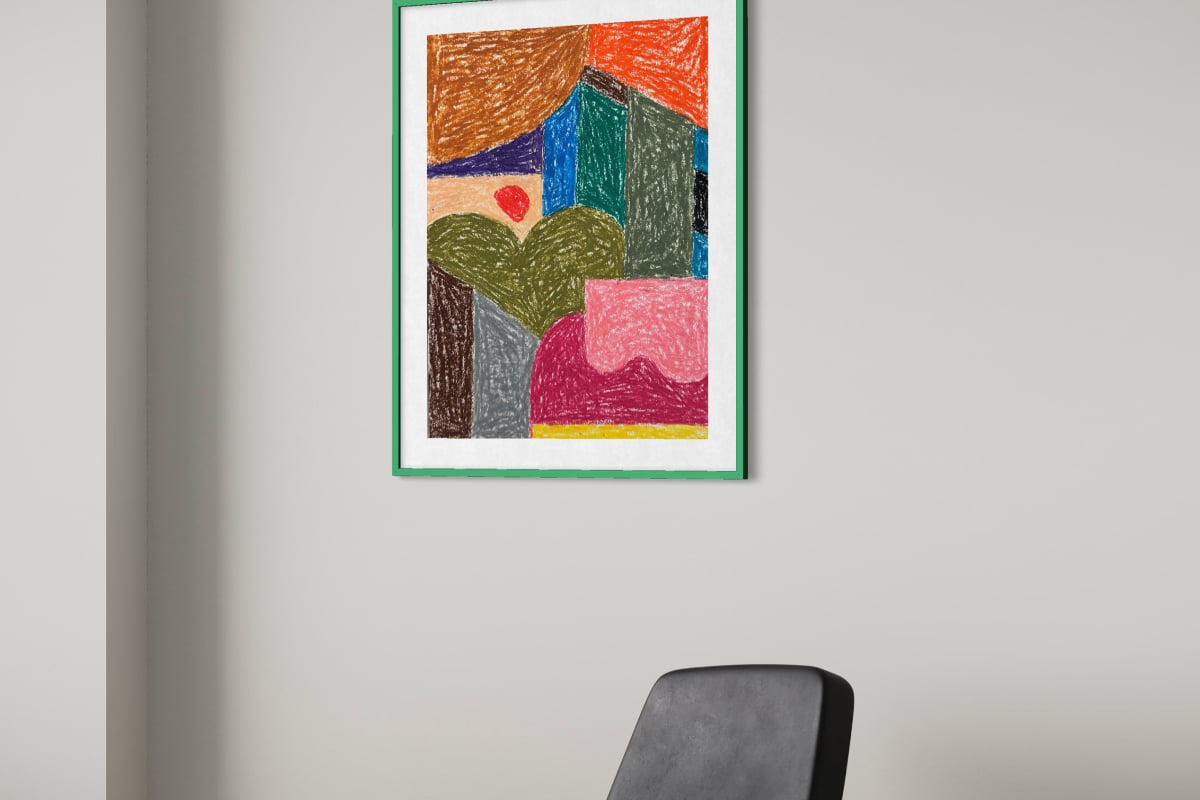
The Chromatic Study 8.5x11 exemplifies how one-of-a-kind chromatic compositions exploring balance and tension through layered geometry can be priced as unique works on archival paper. These pieces ship with certificates of authenticity, establishing clear value propositions for collectors seeking original multi artist creations in more accessible formats.
Gallery Representation Considerations
Galleries approach multi artist creators with varying perspectives. Some prefer specialists with deep medium expertise, while others actively seek versatile artists who can provide diverse inventory. Research gallery programs before approaching them, noting whether they represent other multi artist creators and how those portfolios are presented.
When approaching galleries, emphasize conceptual coherence across mediums rather than positioning versatility as the primary selling point. Collectors typically invest in artistic vision first, with medium preferences serving as secondary considerations.
Collaborative Multi Artist Projects
The term multiartist also applies to collaborative projects involving multiple creators working toward unified outcomes. These partnerships offer distinct opportunities and challenges compared to individual multi-medium practices.
Structuring Effective Artist Collaborations
Collaborative art requires clear communication, shared vision, and explicit agreements about creative control, attribution, and financial arrangements. Successful multi artist collaborations establish:
- Defined roles: Who contributes which skills or mediums
- Decision-making processes: How creative disputes get resolved
- Credit attribution: How artists are acknowledged in exhibitions and sales
- Financial splits: Revenue sharing for sales, commissions, and licensing
- Timeline agreements: Production schedules and deadline responsibilities
Document these arrangements formally before beginning collaborative work. What seems obvious during initial enthusiasm becomes contentious without written agreements when complications arise.
Benefits of Multi Artist Collaboration
Working with other artists expands creative possibilities beyond individual capabilities. Benefits include:
- Access to skills and techniques outside personal expertise
- Larger-scale projects requiring multiple hands
- Cross-pollination of ideas and approaches
- Shared resource costs for materials and exhibition spaces
- Expanded audience reach through combined networks
Research on multi-artist collaborations demonstrates how collaborative dynamics influence creative outcomes, particularly in fields requiring diverse technical skills. Visual artists can learn from these patterns when structuring their own partnerships.
Digital Tools for Multi Artist Practices
Technology dramatically expands possibilities for artists working across multiple mediums in 2026. Digital tools don't replace traditional techniques but complement them, creating hybrid practices that leverage both approaches.
Essential Digital Capabilities
Multi artist creators in 2026 typically develop proficiency in:
- Digital illustration software: Adobe Creative Suite, Procreate, or Affinity Designer
- 3D modeling applications: Blender, SketchUp, or Cinema 4D for spatial projects
- Photography and documentation: High-quality capture of physical works for prints and promotion
- Portfolio presentation: Website builders, digital catalogs, and virtual exhibition spaces
- Print production knowledge: File preparation for various reproduction methods
These digital skills enhance rather than replace traditional practices. An artist might create original paintings while using digital tools for reproduction, promotion, and variant exploration without compromising the integrity of hands-on work.
Hybrid Physical-Digital Workflows
The most innovative multi artist practices in 2026 seamlessly integrate traditional and digital mediums. Consider workflows that:
- Begin with physical sketches, scan and refine digitally, then return to traditional mediums for final execution
- Create original paintings that inform digital variations or prints
- Develop digital mockups for large-scale physical installations
- Use augmented reality to preview physical works in collector spaces
Understanding how to choose abstract art for your space becomes easier when artists provide digital previews alongside traditional viewing options. This technological integration serves collectors while expanding creative possibilities.
Building Audiences for Multi Artist Work
Marketing multi artist practices requires different approaches than promoting single-medium specialists. Audiences may initially connect with one medium while remaining unaware of broader capabilities.
Content Strategy for Multi-Medium Portfolios
Effective content marketing for multi artist creators includes:
- Behind-the-scenes documentation showing processes across different mediums
- Educational content explaining technical choices and medium-specific challenges
- Thematic narratives connecting diverse works under unified concepts
- Medium-specific tutorials demonstrating expertise in each discipline
- Collector education about caring for different types of artwork
Social media platforms favor certain content types, requiring strategic adaptation. Instagram suits visual documentation across mediums, while YouTube enables longer process videos. Newsletter platforms support deeper conceptual discussions linking varied works.
Email Marketing for Multi Artist Practices
| Email Type | Frequency | Content Focus | Goal |
|---|---|---|---|
| New work announcements | Bi-weekly | Latest pieces across mediums | Direct sales |
| Process insights | Monthly | Technical deep-dives | Build expertise perception |
| Collection stories | Quarterly | Thematic connections | Deepen engagement |
| Exclusive previews | As available | Early access to new work | Reward loyal collectors |
Segment email lists based on collector preferences when possible. Some audiences prefer specific mediums, while others appreciate full creative range. Tailored communication increases relevance and conversion rates.
Professional Development for Multi Artist Careers
Sustaining long-term multi artist practices requires ongoing skill development, market awareness, and business acumen beyond purely creative capabilities.
Continuing Education Across Disciplines
Allocate annual budgets for professional development in both established and emerging mediums. This might include:
- Workshops with master practitioners in specific techniques
- Material science courses for new mediums or experimental approaches
- Business courses addressing pricing, contracts, and gallery relations
- Digital skills training as technologies evolve
- Art historical study providing context for contemporary practices
Many successful multi artist creators dedicate 5-10% of annual income to education and professional development. This investment compounds over time, enabling increasingly sophisticated work and stronger market positioning.
Navigating Art World Institutions
Museums, galleries, and art fairs each present unique opportunities and expectations for multi artist creators. Understanding institutional perspectives enables more strategic engagement.
Contemporary galleries increasingly appreciate versatility when it aligns with coherent artistic vision. Curators seek artists who can provide varied exhibition content while maintaining recognizable identities. Position multi-medium capabilities as creative depth rather than scattered interests during institutional conversations.
Legal and Practical Considerations
Multi artist practices involve specific legal and practical considerations beyond single-medium specialization. Proper planning prevents complications as careers develop.
Copyright and Reproduction Rights
Each artistic medium presents distinct copyright considerations. Original paintings, prints, digital works, and collaborative art projects all involve different rights management requirements. Establish clear policies regarding:
- Which works are available for reproduction and licensing
- How reproduction rights are priced relative to original sales
- Terms for commissioned work across different mediums
- Attribution requirements for collaborative projects
- Digital rights management for works created using technology
Consult with intellectual property attorneys familiar with visual arts when establishing these frameworks. Initial legal investment prevents expensive disputes later.
Studio and Storage Requirements
Multi artist practices demand more complex spatial planning than single-medium work. Different mediums require:
- Separate storage conditions (humidity, temperature, light exposure)
- Distinct work areas to prevent cross-contamination
- Varied ventilation for different materials
- Multiple equipment sets and maintenance schedules
Budget studio space accordingly, recognizing that multi-medium work typically requires 30-50% more space than single-medium practices of comparable output volume.
Long-Term Career Sustainability
Building sustainable multi artist careers requires balancing creative ambition with practical business realities. Many artists struggle to maintain momentum across multiple mediums over decades.
Preventing Creative Burnout
Working across multiple mediums provides natural variety that can prevent the monotony sometimes affecting specialists. However, it also risks overwhelming complexity without careful management. Sustainable practices include:
- Seasonal medium rotation: Focus on painting during certain months, sculpture during others
- Project-based approaches: Complete series in one medium before switching
- Maintaining a primary medium: Designate one discipline as the core practice
- Strategic breaks: Schedule downtime between intensive multi-medium periods
- Realistic output expectations: Accept that multi-medium artists produce less volume per medium than specialists
The understanding that visiting artists from Ireland to various international locations can inspire fresh perspectives applies equally to moving between mediums within individual practices.
Financial Planning for Variable Income
Multi artist practices often generate irregular income streams as different mediums sell at different rates. Original paintings might command high prices but sell infrequently, while prints provide steady but smaller revenue. Financial planning should:
- Maintain operating reserves covering 6-12 months of expenses
- Diversify income across mediums to reduce dependency on single markets
- Develop passive income through print sales and licensing
- Price work to reflect actual time investment across mediums
- Track which mediums generate strongest returns relative to effort
Multi artist practices offer tremendous creative freedom and market opportunities for artists willing to develop genuine expertise across multiple disciplines. The key lies in maintaining thematic coherence while expanding technical capabilities, ensuring that versatility enhances rather than fragments artistic identity. Whether you're drawn to the dynamic interplay of color and form across different mediums or seeking to expand your creative practice beyond traditional boundaries, Nathalie Chikhi offers original artworks and prints exploring chromatic architecture, counterform, and geometric abstraction through varied formats and scales.
