

Non representational art challenges traditional notions of what art should depict. Instead of recognizable subjects like landscapes, portraits, or still lifes, this genre focuses entirely on visual elements such as color, form, line, and texture. For collectors and designers seeking pieces that communicate through pure aesthetic experience rather than literal representation, understanding this art form opens doors to profound emotional and spatial possibilities. As we move through 2026, non representational art continues to dominate contemporary galleries and interior spaces, offering viewers a direct engagement with artistic expression.
Understanding the Foundations of Non Representational Art
Non representational art emerged as a radical departure from centuries of artistic tradition. According to art historians, this approach eliminates all references to the natural world, creating compositions that exist purely as arrangements of visual elements. The movement gained momentum in the early 20th century when artists began questioning whether art needed to imitate reality at all.
The Historical Context and Evolution
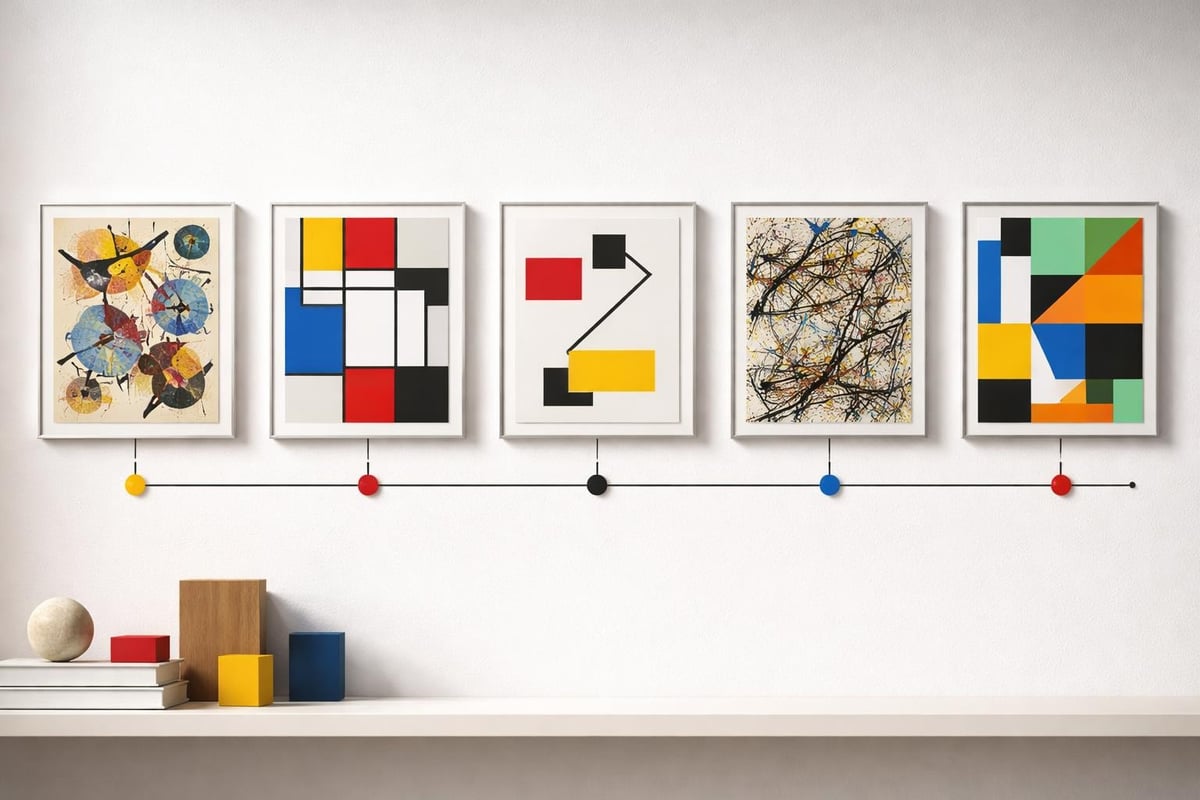
The birth of this movement coincided with rapid technological and social changes in the early 1900s. Artists like Wassily Kandinsky, Piet Mondrian, and Kazimir Malevich pioneered approaches that completely abandoned representational imagery.
Key historical milestones include:
- 1910-1915: Kandinsky's first purely abstract watercolors
- 1917: De Stijl movement's emphasis on geometric abstraction
- 1915: Malevich's "Black Square," a defining moment in non-objective art
- 1940s-1950s: Abstract Expressionism's gestural approaches
These pioneers believed that art could communicate universal truths through color relationships, spatial dynamics, and compositional balance without depicting recognizable objects. Their work laid the groundwork for countless movements that followed.
Distinguishing Features and Visual Language
Non representational art operates through its own visual vocabulary. Unlike abstract art, which may simplify or distort recognizable forms, non representational works contain no reference points to the physical world whatsoever.
| Characteristic | Non Representational Art | Abstract Art | Representational Art |
|---|---|---|---|
| Subject Matter | Pure visual elements | Simplified/distorted forms | Recognizable objects |
| Intent | Emotional/aesthetic response | Interpretation of reality | Depiction of reality |
| Viewer Experience | Direct sensory engagement | Finding meaning in distortion | Recognition and understanding |
| Examples | Mondrian's grids, Kandinsky's compositions | Picasso's cubist works | Rembrandt's portraits |
The distinction matters because it affects how viewers engage with the work. Non representational pieces invite pure aesthetic contemplation, free from the need to identify subjects or narratives.
Major Movements and Approaches in Non Representational Art
Several distinct movements have shaped how artists create work without representational content. Each approach offers different philosophies and techniques for engaging viewers through pure visual means.
Geometric Abstraction and Hard-Edge Painting
Geometric abstraction emphasizes precise shapes, clean lines, and mathematical relationships between forms. Artists working in this tradition create compositions using circles, squares, triangles, and rectangles arranged according to aesthetic principles.
Characteristics of geometric approaches:
- Sharp, defined edges between color areas
- Mathematical precision in composition
- Emphasis on spatial relationships
- Limited or carefully selected color palettes
Hard-edge painting, popularized in the 1960s, takes geometric abstraction further by eliminating any trace of the artist's hand. The surfaces appear completely flat, with colors meeting in crisp, clean lines. This approach emphasizes the painting as an object rather than a window into another world.
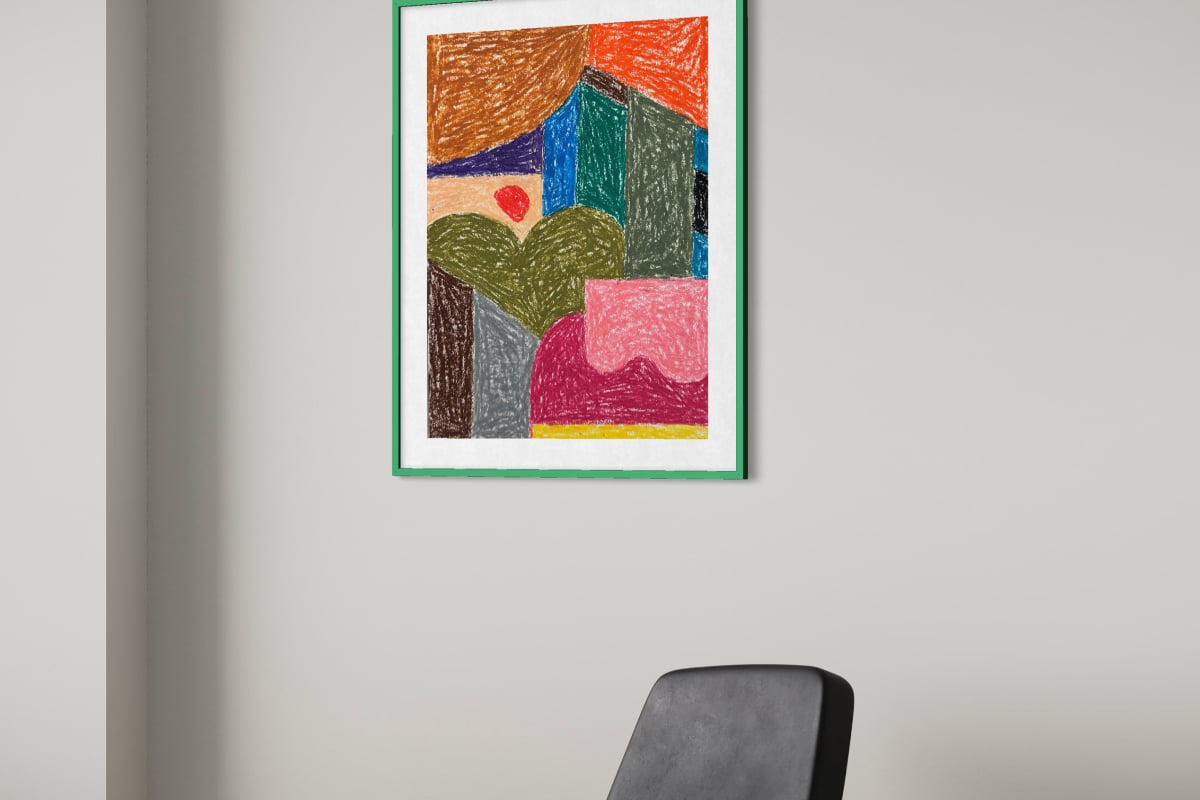
Contemporary artists continue exploring geometric possibilities, particularly in chromatic architecture where color and form interact to create spatial experiences. Works like the Chromatic Study demonstrate how layered geometry can create balance and tension simultaneously, using carefully selected hues to guide the viewer's eye through the composition.
Gestural and Action-Based Non Representational Work
In direct contrast to geometric precision, gestural approaches emphasize spontaneity, movement, and the physical act of painting. Abstract Expressionists like Jackson Pollock and Franz Kline created non representational art through energetic mark-making and dynamic compositions.
This approach values:
- Spontaneous creation - allowing intuition to guide the process
- Physical engagement - using the entire body in art-making
- Emotional directness - conveying feeling through gesture
- Process visibility - showing how the work was created
The resulting works communicate energy, emotion, and movement without depicting any specific subject. Viewers respond to the visceral quality of the marks, the rhythm of the composition, and the sense of the artist's presence in the work.
The Psychological and Emotional Impact of Non Representational Art
Non representational art affects viewers differently than representational work because it bypasses intellectual recognition. Without identifiable subjects to interpret, viewers engage directly with color, form, and composition on an emotional and sensory level.
Color Psychology in Pure Abstraction
Color becomes paramount when recognizable subjects disappear. Artists working in non representational modes understand that color psychology directly influences emotional response and spatial perception.
How colors function in non representational compositions:
- Warm hues (reds, oranges, yellows) advance visually and energize spaces
- Cool tones (blues, greens, purples) recede and create calm
- High contrast creates tension and visual interest
- Analogous schemes produce harmony and flow
- Complementary pairings generate vibration and dynamism
Research from educational resources on non representational art demonstrates that viewers respond measurably to color relationships even when they cannot articulate why a particular composition affects them. This makes color selection crucial for artists creating work intended for specific environments or emotional responses.
Spatial Dynamics and Compositional Balance
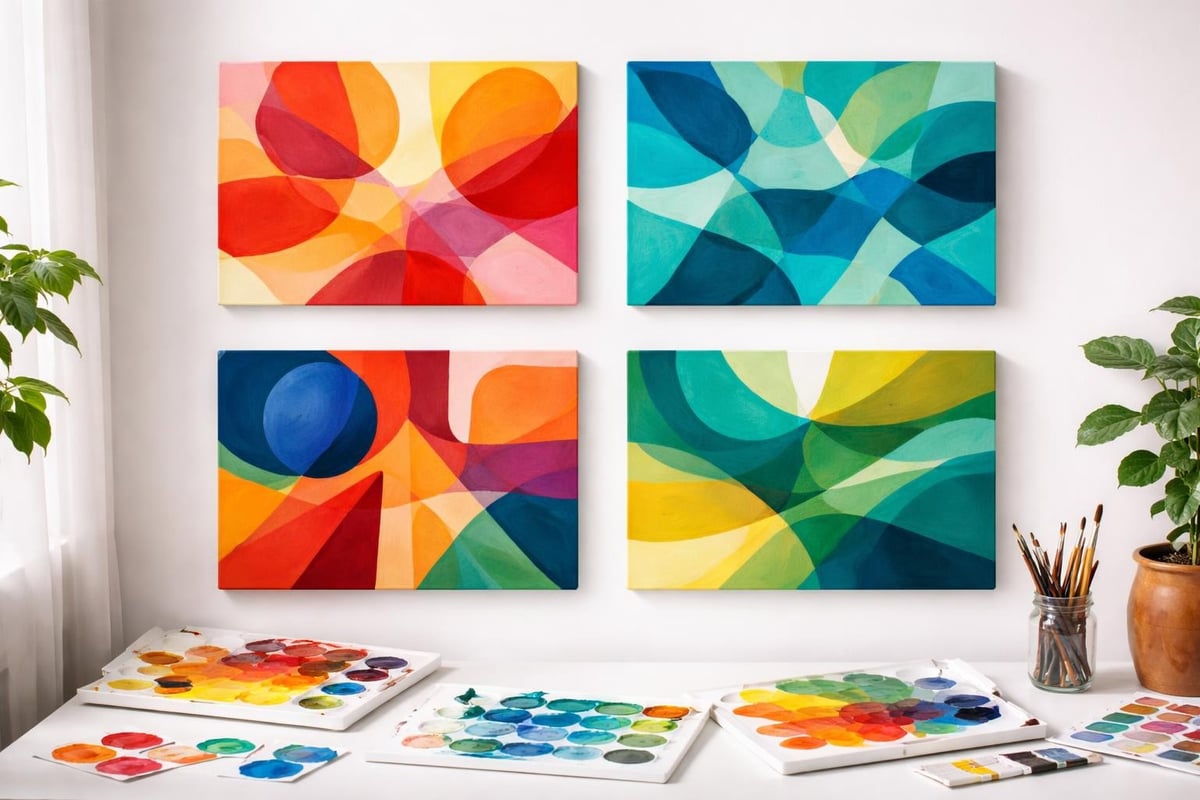
Non representational art creates space through relationships between visual elements rather than through perspective or recognizable depth cues. Artists manipulate:
- Overlap and layering to suggest depth
- Size relationships to create hierarchy
- Directional lines to guide eye movement
- Positive and negative space to establish rhythm
- Symmetry and asymmetry to create balance or tension
These compositional strategies work subconsciously on viewers, creating experiences of movement, stability, conflict, or harmony. The absence of recognizable subjects allows these formal relationships to become the entire content of the work.
Collecting and Displaying Non Representational Art
For collectors and designers, non representational art offers unique advantages. Without specific subject matter, these works adapt to various environments while maintaining their visual impact. Understanding how to select and display such pieces maximizes their effectiveness.
Choosing Non Representational Work for Your Space
Selecting abstract art requires different considerations than choosing representational pieces. Instead of asking whether you like the subject, focus on how the work makes you feel and how it functions in your environment.
Essential selection criteria:
- Emotional resonance - Does the piece evoke the feeling you want in the space?
- Color harmony - Do the hues complement your existing palette or provide desired contrast?
- Scale appropriateness - Is the work sized correctly for the wall and room?
- Energy level - Does the composition's intensity match the space's purpose?
- Artistic quality - Does the work demonstrate technical skill and intentional design?
Consider whether you want the art to blend harmoniously with your space or serve as a bold focal point. Understanding the difference between prints and original artworks also helps align your choice with your budget and collecting goals.
Installation and Presentation Strategies
How you display non representational art significantly affects its impact. These works often benefit from specific presentation approaches that honor their formal qualities.
| Display Approach | Best For | Considerations |
|---|---|---|
| Gallery-style white walls | Geometric and minimalist pieces | Eliminates distraction, emphasizes form |
| Groupings and series | Related works exploring themes | Creates dialogue between pieces |
| Bold accent walls | Works needing strong context | Color backdrop can enhance or contrast |
| Professional lighting | All non representational work | Proper illumination reveals subtle details |
| Generous spacing | Large-scale or complex compositions | Allows breathing room for contemplation |
Many collectors find that non representational pieces work exceptionally well in professional environments, where avoiding specific subject matter prevents potential conflicts with diverse audiences. The works communicate sophistication and creativity without imposing narrative interpretations.
Creating Non Representational Art: Techniques and Approaches
Artists developing non representational work employ various techniques to create compelling compositions without referencing the visible world. Understanding these methods illuminates what makes successful pieces work.
Material Exploration and Mark-Making
The physical properties of materials become central when subject matter disappears. Artists experiment with how different media behave and interact:
- Oil pastels create rich, layered textures through blending and overlay
- Acrylics offer bold, flat color areas with crisp edges
- Watercolors produce luminous, flowing effects
- Mixed media combines materials for complex surface qualities
Process-based techniques include:
- Scraping and scratching to reveal underlayers
- Pouring and dripping for organic, uncontrolled effects
- Masking and stenciling for precise geometric shapes
- Layering transparent and opaque elements for depth
Contemporary artists often work in series, exploring variations on themes through systematic changes in color, scale, or composition. This approach allows deep investigation of specific visual problems and solutions.
Compositional Strategies and Design Principles
Creating successful non representational art requires strong command of fundamental design principles. Without recognizable content to carry viewer interest, the formal structure must be exceptionally compelling.
Core principles at work:
- Unity and variety - repeating elements while introducing enough change to maintain interest
- Emphasis and focal points - directing attention through contrast, placement, or scale
- Rhythm and movement - creating visual flow through repeated patterns and directional cues
- Balance - distributing visual weight through symmetry or asymmetrical equilibrium
- Proportion and scale - establishing relationships between elements that feel right
Artists exploring these concepts often develop signature approaches that distinguish their work while allowing continued exploration within established parameters. The challenge lies in creating pieces that feel both fresh and resolved.
The Contemporary Relevance of Non Representational Art
As we progress through 2026, non representational art continues evolving while maintaining relevance across multiple contexts. Its applications extend far beyond gallery walls into commercial, residential, and digital spaces.
Applications in Interior Design and Architecture
Designers increasingly turn to non representational art for projects requiring visual impact without specific subject matter. Resources on avant-garde abstract art for interior designers highlight how these pieces create sophisticated atmospheres in luxury spaces.
Why designers prefer non representational work:
- Universal appeal across diverse audiences
- Flexibility in interpretation and meaning
- Strong visual presence without narrative baggage
- Ability to complement various design styles
- Timeless quality that transcends trends
Commercial spaces particularly benefit from large-scale non representational installations that create memorable environments while avoiding potentially controversial subject matter.
Digital Age Influences and New Directions
Contemporary artists creating non representational art increasingly incorporate digital tools and processes. Software allows precise geometric constructions, color experiments, and iterations impossible through traditional means alone.
Emerging directions include:
- Algorithmic generation of compositional elements
- Interactive pieces responding to viewer presence
- Projection-based installations creating immersive environments
- Digital-to-physical translations maintaining handmade qualities
- NFT explorations of non representational concepts
However, many artists maintain commitment to traditional materials, valuing the tactile qualities and physical presence that original artworks on canvas and paper provide. The handmade object retains significance even as digital possibilities expand.
Building a Personal Connection with Non Representational Art
For those new to non representational art, developing appreciation requires shifting expectations about what art should do. These works offer rewards different from recognizable imagery but equally valuable.
Developing Your Visual Literacy
Understanding non representational art deepens through active looking and repeated exposure. Educational resources suggest specific strategies for engaging with these works more fully.
Practices for deeper engagement:
- Spend extended time with individual pieces, noting how your response changes
- Compare similar works to identify what makes each unique
- Learn about the artist's process and intentions without letting them dictate your experience
- Notice your physical and emotional responses to different compositions
- Visit galleries and museums to experience works at full scale
Many viewers discover that non representational art becomes more rewarding with familiarity. Initial confusion often transforms into appreciation for subtle relationships and aesthetic decisions.
The Role of Personal Interpretation
Unlike representational art where interpretation involves identifying what's depicted, non representational work invites purely subjective response. There's no "correct" reading of a composition composed entirely of visual elements.
This freedom allows:
- Responses based purely on individual sensibility
- Emotional engagement without predetermined meaning
- Space for contemplation and personal reflection
- Connection to universal visual experiences
- Appreciation of beauty for its own sake
The relationship between viewer and non representational artwork remains uniquely personal, changing with mood, context, and individual growth. What speaks to you today may differ from tomorrow's response, keeping the work perpetually fresh.
Non representational art offers powerful experiences through pure visual elements, communicating emotion and aesthetic beauty without depicting recognizable subjects. Whether you're drawn to precise geometric compositions or gestural abstractions, understanding this art form enriches how you experience visual culture and design meaningful spaces. Explore Nathalie Chikhi's collection of original artworks and prints featuring chromatic compositions that demonstrate how color, form, and geometry create compelling non representational pieces for contemporary interiors.
