

Abstract compositions have transformed the visual arts landscape over the past century, shifting the focus from literal representation to pure expression through form, color, and structure. These non-representational works challenge viewers to engage with art on an emotional and intellectual level, free from the constraints of depicting recognizable subjects. In 2026, abstract compositions continue to evolve, incorporating new materials, digital techniques, and philosophical approaches that push the boundaries of what visual art can communicate.
Understanding the Foundation of Abstract Compositions
The term "abstract compositions" refers to artworks that prioritize visual elements such as line, shape, color, and texture over realistic depiction. Rather than representing the physical world, these compositions create their own visual language. This fundamental shift in artistic approach began in the early twentieth century and has since become one of the most influential movements in modern art history.
Artists working with abstract compositions draw inspiration from various sources: music, mathematics, emotion, and pure visual experimentation. The connection between abstract music and visual art has long fascinated creators, as both mediums can express feeling and atmosphere without literal narrative. This parallel demonstrates how abstraction transcends individual art forms.
Key Elements That Define Abstract Work
Several core components distinguish effective abstract compositions from random arrangements:
- Color relationships: How hues interact, contrast, and harmonize across the surface
- Compositional balance: The distribution of visual weight and tension
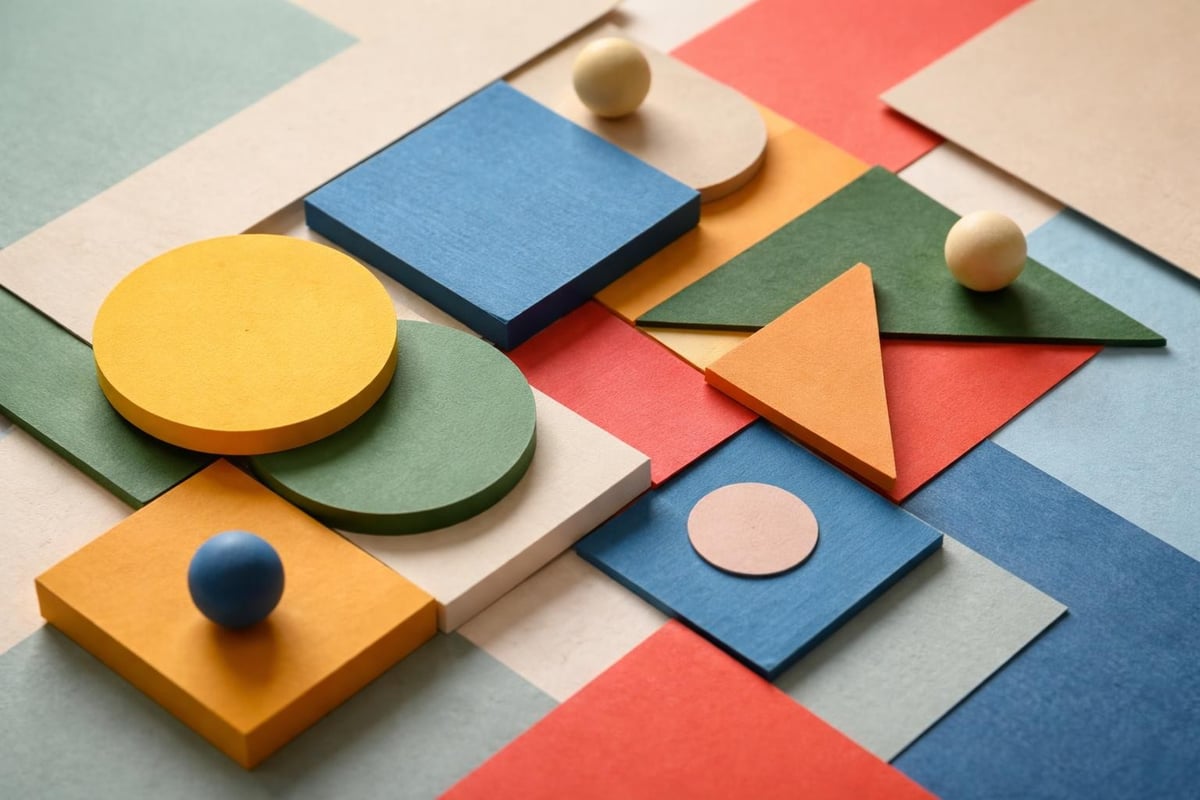
- Geometric or organic forms: Whether shapes follow mathematical precision or natural flow
- Layering techniques: How elements overlap and create depth
- Negative space: The intentional use of emptiness to enhance positive forms
The interplay between these elements creates visual dynamics that engage viewers without relying on subject matter. Understanding these principles allows both artists and collectors to appreciate the deliberate choices behind seemingly spontaneous works.
Historical Context and Influential Movements
Abstract compositions emerged as artists began questioning traditional representation in the early 1900s. Wassily Kandinsky's groundbreaking work, including Composition X, marked a decisive break from figurative art. His final major abstract work synthesized years of exploration into pure color and form, establishing principles that contemporary artists still reference today.
The Suprematist movement, exemplified by works like Suprematist Composition by Kazimir Malevich, took abstraction to its logical extreme. These compositions reduced art to fundamental geometric shapes, particularly squares and circles, arranged with mathematical precision. This radical simplification challenged viewers to find meaning in pure form.
American artists contributed significantly to the evolution of abstract compositions through the mid-twentieth century. Albert E. Gallatin's work demonstrated how American Abstract Artists synthesized Cubist and Constructivist ideas into distinctly new compositions. This cross-pollination of European and American approaches enriched the abstract tradition.
| Movement | Key Characteristics | Time Period | Primary Focus |
|---|---|---|---|
| Suprematism | Geometric shapes, limited color | 1915-1925 | Pure abstraction |
| Abstract Expressionism | Gestural marks, emotion | 1940s-1950s | Process and feeling |
| Color Field | Large areas of flat color | 1950s-1960s | Chromatic relationships |
| Geometric Abstraction | Precise forms, mathematical | 1920s-present | Structure and order |
Creating Abstract Compositions: Techniques and Approaches
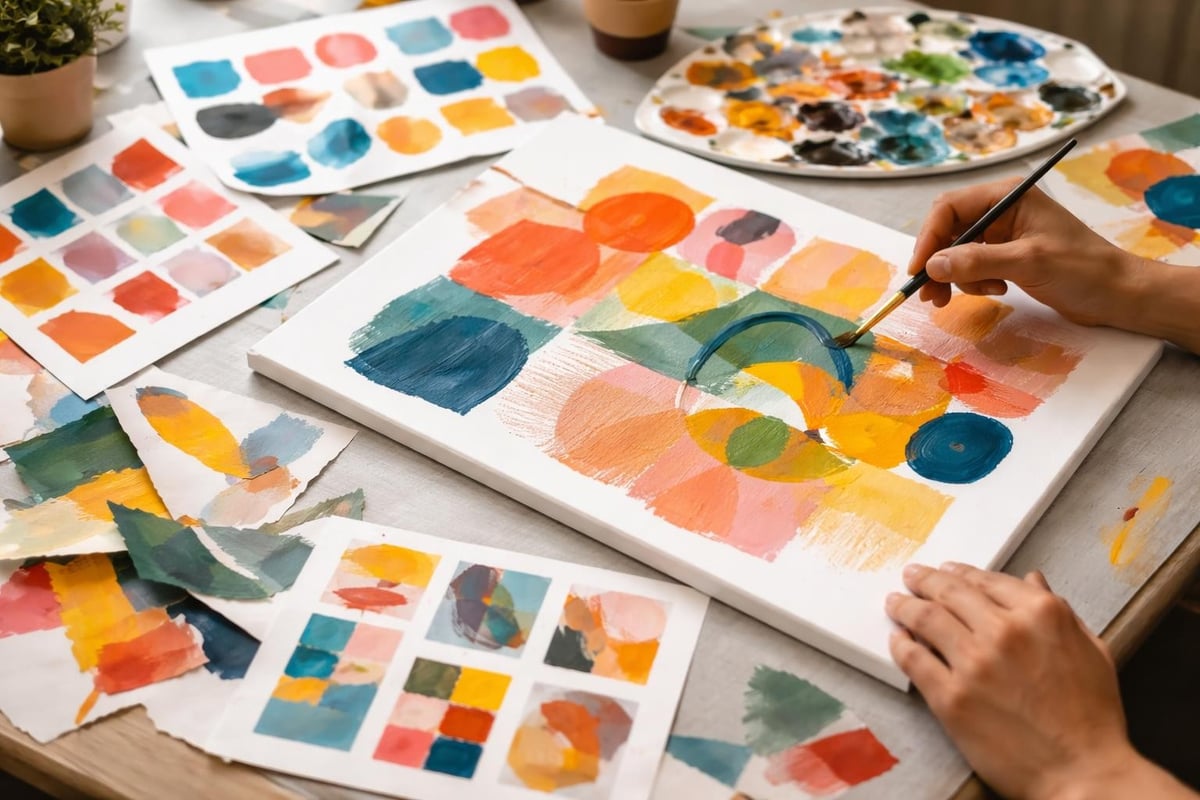
Artists develop abstract compositions through varied methodologies, each offering unique advantages. Some begin with deliberate planning, sketching compositional structures before applying color. Others embrace intuitive processes, allowing the work to evolve organically through successive layers and spontaneous decisions.
The Planned Approach
Structured methods involve careful consideration of compositional elements before execution:
- Thumbnail sketches: Create multiple small studies exploring different arrangements
- Color studies: Test palette combinations and relationships
- Grid systems: Establish underlying structure using mathematical proportions
- Value mapping: Plan light and dark distribution across the composition
- Execution: Transfer the refined concept to the final surface
This systematic approach suits artists who appreciate control and precision. It allows for refinement and problem-solving before committing to permanent marks.
The Intuitive Method
Spontaneous creation emphasizes discovery and emotional authenticity:
- Begin with a single mark or color application
- Respond to each element with subsequent additions
- Build layers gradually, covering and revealing
- Allow accidents and unexpected results to guide decisions
- Recognize completion through visual instinct rather than predetermined goals
Many contemporary artists blend both approaches, starting with loose intentions but remaining open to improvisation. This hybrid methodology balances structure with creative freedom.
Color Theory in Abstract Compositions
Color serves as perhaps the most powerful tool in abstract compositions, capable of evoking emotion, creating space, and establishing rhythm without representational content. Artists working abstractly must understand how hues interact, influence perception, and create visual pathways across the picture plane.
Chromatic relationships fall into several categories that artists manipulate for different effects. Complementary colors (opposites on the color wheel) create vibrant tension and visual energy. Analogous colors (neighbors on the wheel) produce harmony and subtle transitions. Triadic schemes (three equally spaced hues) offer balanced variety without chaos.
Temperature plays a crucial role in abstract work. Warm colors (reds, oranges, yellows) typically advance toward the viewer, while cool colors (blues, greens, purples) recede. Skilled artists exploit these tendencies to create depth on flat surfaces. The chromatic architecture collection demonstrates how deliberate color choices establish spatial relationships and emotional resonance in non-representational work.
Value contrast-the difference between light and dark-organizes visual information even in highly colorful compositions. High contrast creates drama and clear focal points, while low contrast produces subtlety and ambiguity. Abstract compositions often employ both within a single work, guiding the viewer's eye through varying levels of visual intensity.
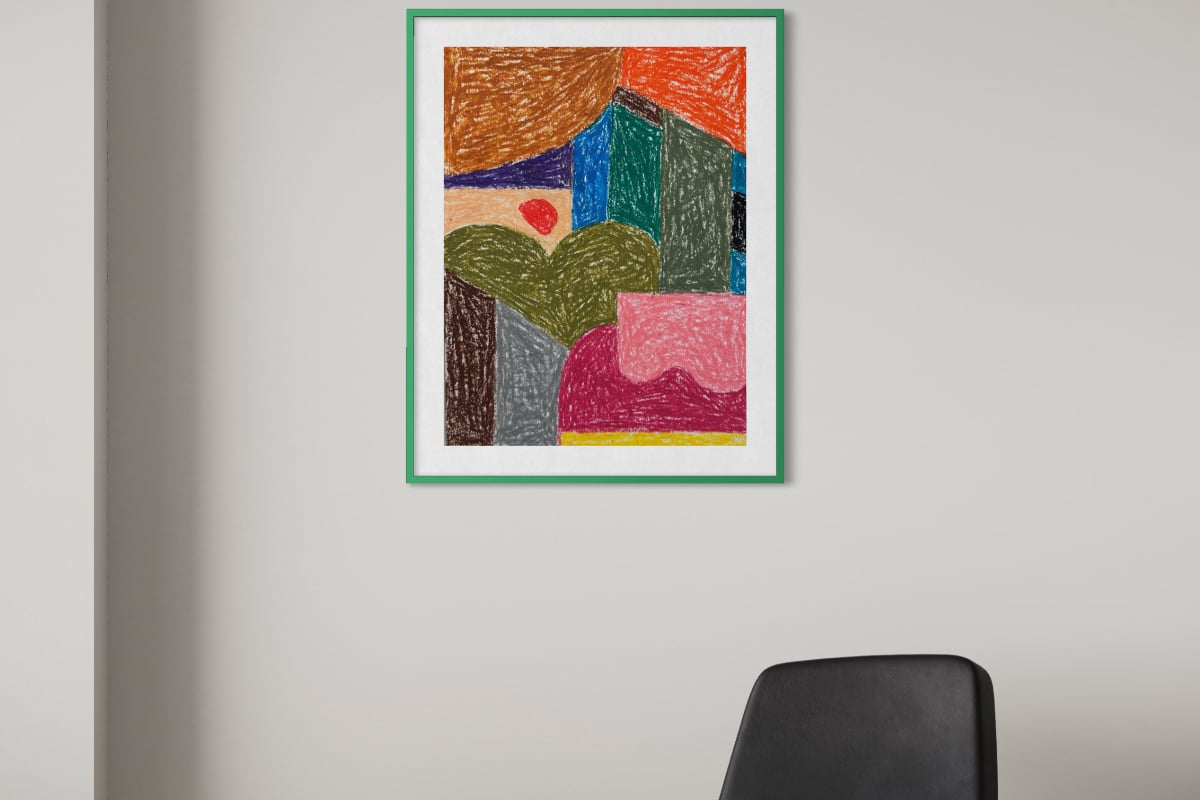
For collectors seeking to explore how layered geometry and chromatic balance create tension and harmony, The Chromatic Study offers a compelling example of these principles in practice through oil pastel on archival paper.
Compositional Structure and Visual Flow
Even without recognizable subjects, abstract compositions require thoughtful organization to create coherent visual experiences. Artists employ various structural strategies to guide viewer attention and establish rhythm across the work.
Rule of Thirds and Golden Ratio
Classical compositional principles apply equally to abstract and representational art. Dividing the picture plane into thirds both horizontally and vertically creates four intersection points that naturally attract attention. Placing key elements at or near these points produces balanced, engaging compositions.
The golden ratio (approximately 1:1.618) appears throughout nature and classical art. Abstract artists incorporate this proportion to create compositions that feel inherently harmonious. Whether dividing space, sizing elements, or establishing relationships between forms, this mathematical constant provides a foundation for visual organization.
Movement and Rhythm
Abstract compositions create movement through several techniques:
- Directional lines: Lead the eye through the composition
- Repeated shapes: Establish patterns and visual beats
- Gradual transitions: Guide attention smoothly between areas
- Strategic contrast: Create stopping points and emphasis
- Edge treatment: Determine whether compositions feel contained or expansive
Artists like Kandinsky explored these principles extensively. His Composition VII demonstrates complex abstract forms working together to create dynamic movement and emotional intensity through carefully orchestrated visual elements.
Contemporary Abstract Compositions in 2026
Today's abstract compositions reflect both historical traditions and contemporary innovations. Digital tools have expanded possibilities for planning, executing, and even generating abstract work. However, traditional media-painting, drawing, collage-remain vital, offering tactile qualities and unique marks that digital processes cannot replicate.
Many contemporary artists explore hybrid approaches, combining hand-made elements with digital manipulation or incorporating mixed media into single compositions. This expansion of materials and techniques reflects broader cultural shifts toward experimentation and boundary-crossing in all creative fields.
Current Trends and Directions
Abstract compositions in 2026 demonstrate several notable characteristics:
| Trend | Description | Impact |
|---|---|---|
| Sustainable materials | Using eco-friendly and recycled media | Broader appeal to conscious collectors |
| Textural emphasis | Heavy impasto, collage, dimensional elements | Enhanced physical presence |
| Digital-physical integration | Combining traditional and digital techniques | New aesthetic possibilities |
| Minimalist resurgence | Return to simplified forms and limited palettes | Reaction to visual overload |
| Narrative abstraction | Abstract work informed by personal or political themes | Deeper conceptual engagement |
The evolution of abstract compositions continues as artists respond to technological advances, social changes, and ongoing dialogue with art history. Works that might have seemed radical decades ago now inform mainstream design, while cutting-edge artists push abstraction into unexplored territories.
Developing Your Eye for Abstract Compositions
Appreciating abstract compositions requires different viewing strategies than representational art. Without familiar subjects to anchor interpretation, viewers must engage with pure visual relationships and their own emotional responses. This openness can feel challenging but ultimately proves rewarding.
Start by spending extended time with individual works. First impressions matter, but abstract compositions often reveal subtleties through sustained attention. Notice which areas draw your eye first, how color relationships shift as you look, and what emotions or associations arise without conscious interpretation.
Consider the artist's choices methodically:
- Examine the palette and color relationships
- Identify the dominant shapes or forms
- Assess the compositional balance and tension
- Observe texture, layering, and surface quality
- Notice your emotional and intellectual responses
Educational resources can enhance understanding significantly. The Whitney Museum offers activities that encourage creating abstract compositions inspired by music, demonstrating connections between visual and auditory art forms. These hands-on experiences build intuitive comprehension.
Exploring different artists' approaches broadens perspective. David M. Kessler's insights on abstract painting compositions provide practical techniques and conceptual frameworks that illuminate how artists structure non-representational work. Understanding process deepens appreciation of finished pieces.
Collecting Abstract Compositions
Abstract compositions appeal to collectors for numerous reasons: their emotional impact, decorative versatility, investment potential, and the intellectual engagement they demand. When building a collection, consider both personal response and broader market considerations.
Personal Connection Versus Investment
The most satisfying collections balance aesthetic pleasure with financial wisdom. While market trends matter for investment-focused collectors, living with art you genuinely enjoy proves far more rewarding than owning works chosen purely for potential appreciation. Abstract compositions offer particular advantages in domestic settings, as their non-representational nature allows flexible placement without contextual constraints.
Research artists whose work resonates with you. Explore their artist statements to understand conceptual frameworks and intentions. Many contemporary artists maintain accessible online presences, making it easier to follow their development and acquire work directly.
Building a Cohesive Collection
Collections gain coherence through various organizing principles:
- Thematic focus: Color-based work, geometric versus organic, specific movements
- Medium emphasis: Works on paper, paintings, mixed media
- Size considerations: Large statement pieces versus intimate studies
- Single artist depth: Multiple works tracking an artist's evolution
- Diverse voices: Broad representation across styles and creators
The paintings collection demonstrates how abstract works can vary while maintaining visual relationships that allow thoughtful grouping. Whether collecting broadly or focusing narrowly, establish criteria that guide acquisition decisions while remaining open to exceptional pieces that challenge your parameters.
Abstract compositions offer endless possibilities for expression, interpretation, and visual experience. By understanding the principles, history, and contemporary practice of non-representational art, both artists and collectors can engage more deeply with this vital creative tradition. Whether you're drawn to geometric precision, gestural spontaneity, or chromatic exploration, Nathalie Chikhi creates original abstract artworks and prints that embody these timeless principles while offering fresh perspectives on form, color, and composition.
