

The concept of creating art with art represents a sophisticated approach to artistic practice where artists build upon, respond to, or incorporate existing artworks into new creative expressions. This methodology transcends simple reproduction or copying, instead fostering a dialogue between different pieces, styles, and creative periods. Artists who engage in this practice develop layered compositions that reference, reinterpret, or directly incorporate other artworks, creating rich visual conversations that deepen the viewer's experience and understanding of both the original and new pieces.
Understanding the Philosophy Behind Creating Art with Art
The practice of making art with art connects deeply to historical artistic traditions while remaining thoroughly contemporary. This approach acknowledges that no artwork exists in isolation; each piece participates in an ongoing conversation with art history, cultural context, and other creative works.
When artists create new works that reference or incorporate existing art, they engage with the philosophy of art for art's sake while simultaneously expanding beyond it. The original doctrine emphasized art's intrinsic value, but contemporary approaches recognize that art gains additional layers of meaning through its relationships with other works.
Building Visual Conversations Through Multiple Works
Artists can structure their creative practice around creating series or collections that function as unified explorations of specific themes or concepts. Each individual piece contributes to a larger dialogue, with works responding to and building upon one another.
This approach offers several distinct advantages:
- Thematic depth: Multiple works exploring the same concept from different angles create richer understanding
- Visual coherence: Related pieces establish recognizable aesthetic languages that strengthen viewer engagement
- Experimental freedom: Series work allows artists to test variations and iterations without abandoning successful elements
- Collector appeal: Cohesive bodies of work attract collectors seeking meaningful additions to their collections
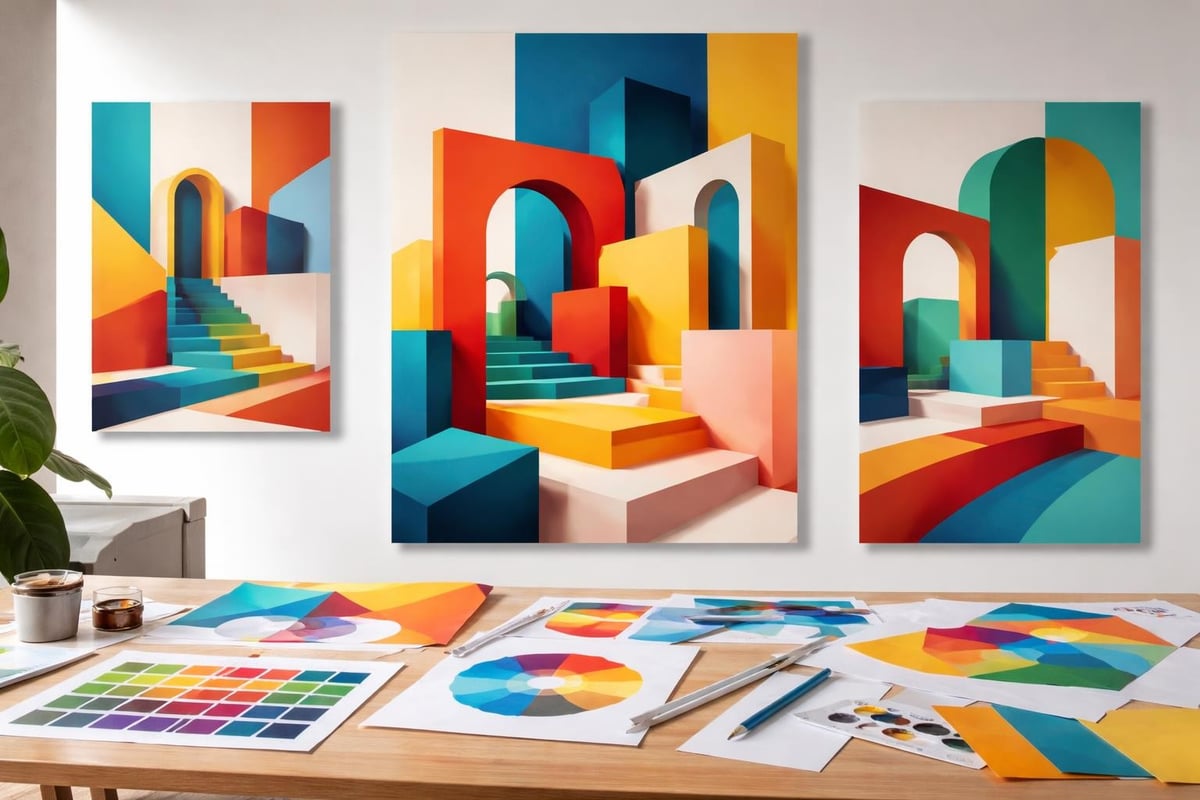
The practice of developing interconnected bodies of work allows artists to explore complex ideas that single pieces cannot fully capture. When examining chromatic architecture collections, viewers encounter multiple perspectives on color relationships, geometric tension, and compositional balance that collectively communicate sophisticated artistic concepts.
Techniques for Incorporating Art into New Artistic Works
Artists employ various methodologies when creating art with art, each offering distinct creative possibilities and conceptual frameworks. Understanding these approaches enables both creators and collectors to appreciate the complexity inherent in layered artistic dialogues.
Direct Incorporation and Collage Methods
Physical incorporation represents one of the most literal approaches to making art with art. Artists integrate existing artworks, reproductions, or art materials into new compositions, creating hybrid pieces that honor the source material while transforming it into something entirely new.
| Technique | Materials Used | Conceptual Impact | Technical Considerations |
|---|---|---|---|
| Collage | Printed reproductions, magazine cutouts | Commentary on reproduction and originality | Archival adhesives, surface preparation |
| Assemblage | Three-dimensional art objects | Dialogue between sculpture and found objects | Structural integrity, weight distribution |
| Digital Compositing | Scanned or photographed artworks | Exploration of technology's role in art | Resolution quality, color accuracy |
| Mixed Media Layering | Original sketches, paintings, drawings | Integration of multiple creative processes | Medium compatibility, drying times |
Responsive Creation and Series Development
Another powerful approach involves creating new artworks that respond to existing pieces without physically incorporating them. This method emphasizes conceptual and visual dialogue rather than literal integration.
Artists developing responsive works often begin by deeply studying a source piece or collection. They identify specific elements to respond to, such as:
- Color relationships and chromatic choices that evoke particular emotional responses
- Compositional structures that create balance, tension, or movement
- Thematic content that addresses specific ideas or narratives
- Technical approaches that demonstrate particular material handling or process
- Scale considerations that influence viewer perception and engagement
The responsive approach allows artists to maintain their individual voice while acknowledging influences and creating meaningful connections. Works created through this methodology demonstrate how contemporary artists engage with tradition while pushing boundaries.
Art with Art in Contemporary Practice
The contemporary art world increasingly recognizes the value of creating art with art as both a conceptual framework and practical methodology. This recognition manifests in various contexts, from gallery exhibitions to digital platforms.
Exhibition Strategies and Presentation
Presenting multiple related works together amplifies their individual and collective impact. Curators and artists carefully consider spatial relationships, viewing sequences, and contextual information to maximize the dialogue between pieces.
Effective presentation strategies include:
- Installing works in deliberate sequences that guide viewer experience
- Varying scales to create visual rhythm and emphasis
- Grouping thematically related pieces while maintaining breathing room
- Providing interpretive materials that illuminate connections without over-explaining
- Creating sight lines that encourage comparison and contemplation
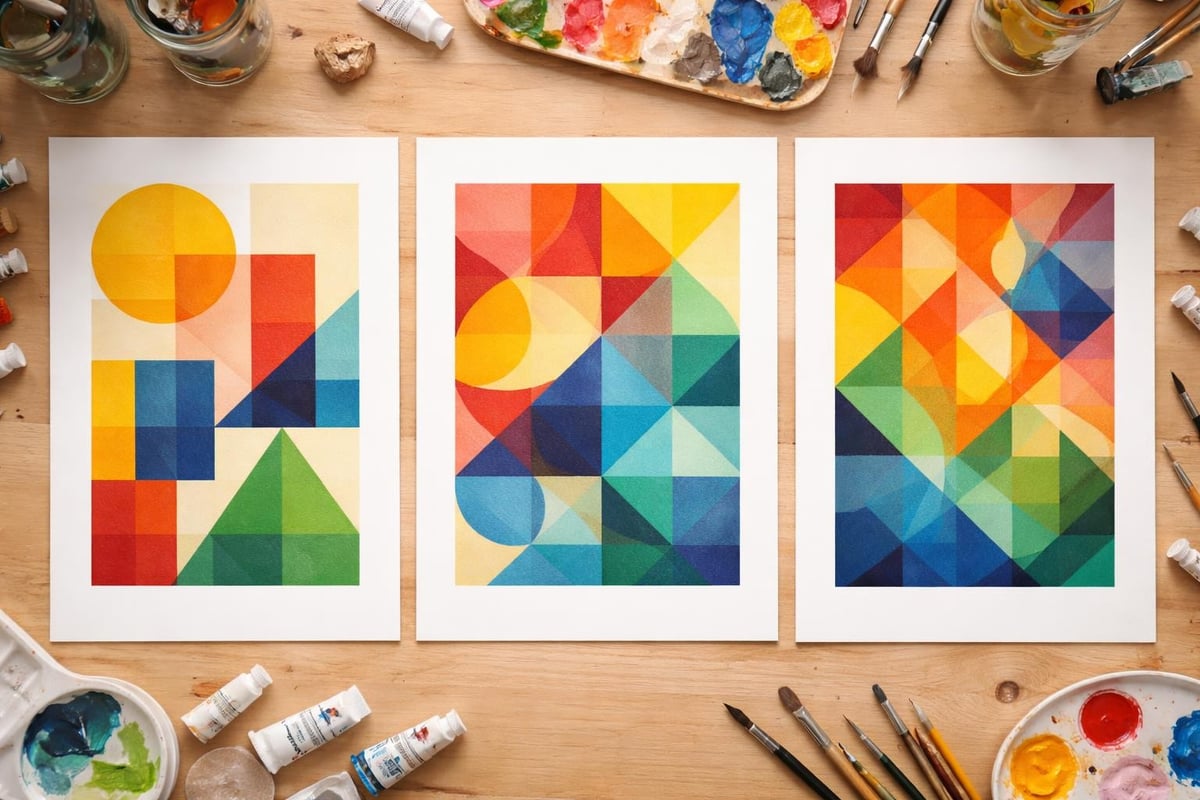
When artists present works like The Triptych Dialogue, they invite viewers to experience how three distinct yet interconnected compositions explore chromatic relationships through layered geometry. Each panel contributes its unique perspective while the collective arrangement creates a more comprehensive artistic statement than any single piece could achieve alone.
Digital Platforms and Virtual Dialogues
Technology has expanded possibilities for creating and presenting art with art beyond physical limitations. Digital platforms enable artists to experiment with relationships between works in ways previously impossible.
Artists now utilize:
Virtual arrangement tools that allow testing different combinations and spatial relationships before committing to physical installations. These digital previews help artists understand how pieces interact visually and conceptually.
Social media presentations that juxtapose works in unexpected ways, creating new dialogues through digital curation. Platforms like Instagram enable artists to present series sequentially or as grids that reveal patterns and variations.
Augmented reality applications that overlay digital artworks onto physical spaces, creating hybrid experiences that merge real and virtual artistic elements.
Building Cohesive Collections Through Artistic Dialogue
Artists who commit to creating art with art often develop signature approaches that define their practice. These methodologies become recognizable aspects of their artistic identity while allowing continued evolution and experimentation.
Establishing Thematic Frameworks
Successful bodies of work typically organize around clear thematic frameworks that provide structure without limiting creative exploration. These frameworks might focus on:
- Material investigations exploring how different media interact and transform one another
- Conceptual themes examining specific ideas through multiple visual approaches
- Formal studies investigating compositional elements like balance, rhythm, or tension
- Narrative development unfolding stories or ideas across multiple works
- Process documentation revealing creative evolution through sequential pieces
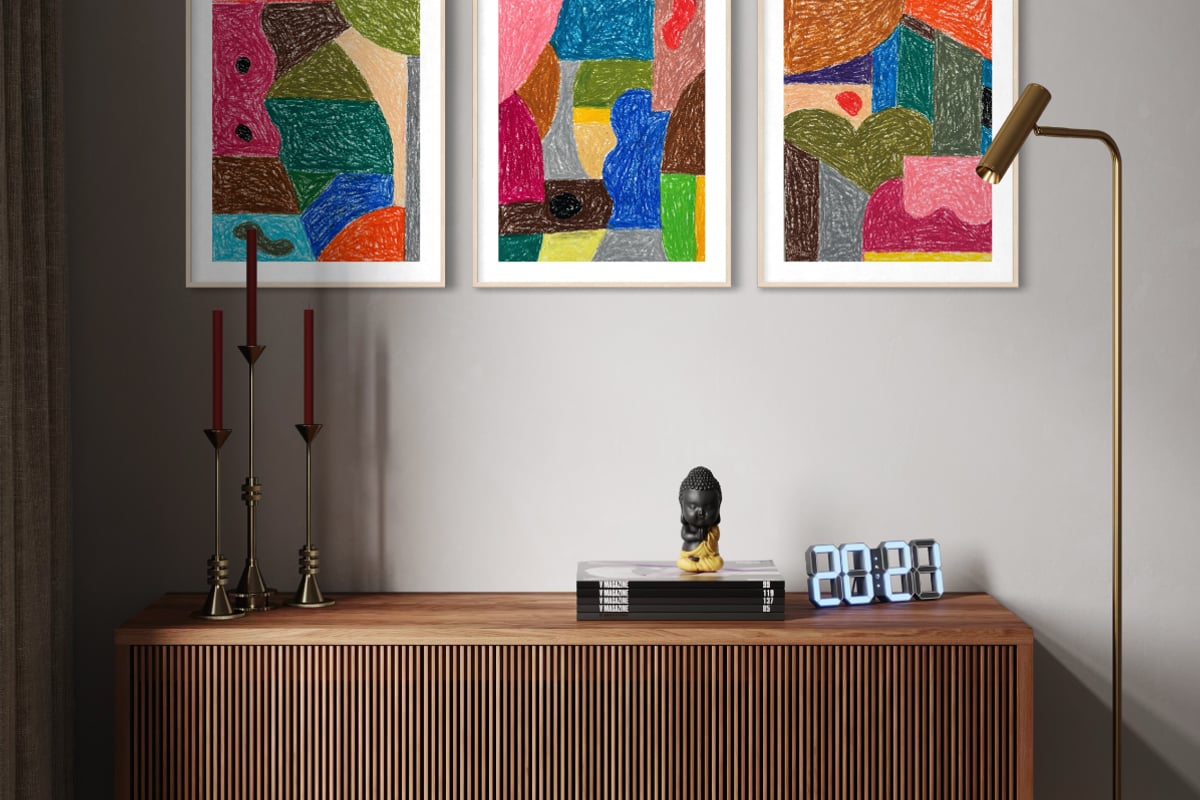
The counterform collection demonstrates how thematic consistency creates powerful artistic statements. By exploring negative space and geometric relationships across multiple works, artists develop sophisticated visual languages that communicate complex ideas through accessible formal elements.
Maintaining Unity While Encouraging Variation
The challenge in creating art with art lies in balancing cohesion with diversity. Collections that feel too uniform risk monotony, while excessive variation can fragment viewer experience and dilute conceptual impact.
Successful strategies include:
- Establishing consistent formal elements like color palettes or compositional structures across works
- Varying scale systematically to create visual hierarchy and rhythmic progression
- Developing progressive complexity where later works build upon earlier explorations
- Introducing controlled variables that change predictably while other elements remain constant
- Creating intentional outliers that challenge established patterns while remaining visually connected
The Collector's Perspective on Related Artworks
Understanding how collectors approach art with art provides valuable insights for artists developing cohesive bodies of work. Collectors increasingly seek pieces that function both independently and as parts of larger collections.
Investment in Artistic Narratives
Contemporary collectors recognize that acquiring multiple related works often provides greater satisfaction than purchasing isolated pieces. Related artworks offer:
Depth of engagement: Multiple works reward repeated viewing by revealing new relationships and subtleties over time. Collectors discover fresh perspectives as their understanding of the artist's practice deepens.
Installation flexibility: Collections of related works provide options for rotating displays, creating seasonal arrangements, or adapting presentations to different spaces within a home or office.
Appreciation potential: Cohesive bodies of work often increase in value more significantly than individual pieces, particularly when the artist's practice gains recognition.
Conversation starters: Related artworks generate richer discussions with guests and fellow collectors who appreciate the nuanced dialogues between pieces.
| Collection Type | Typical Pieces | Display Approach | Investment Consideration |
|---|---|---|---|
| Series progression | 3-5 related works | Sequential arrangement | Complete sets appreciate faster |
| Thematic variation | 2-4 pieces exploring one concept | Grouped installation | Flexibility for future additions |
| Scale relationships | Works in complementary sizes | Hierarchical display | Anchor pieces with smaller satellites |
| Process documentation | Beginning to finished states | Chronological presentation | Educational value enhances appeal |
Acquiring Art with Intentionality
Collectors building meaningful collections of related artworks benefit from strategic acquisition approaches. Rather than purchasing opportunistically, intentional collectors:
- Research artists' complete bodies of work to understand thematic development
- Identify which collections or series resonate most strongly with their aesthetic preferences
- Consider how new acquisitions will dialogue with existing pieces in their collections
- Plan installation spaces that accommodate multiple related works effectively
- Build relationships with artists to gain insights into creative processes and upcoming works
The original artworks available through dedicated artist platforms provide collectors with opportunities to acquire pieces that participate in ongoing artistic conversations. Original works carry unique value as singular expressions within broader thematic explorations.
Technical Considerations for Series Development
Artists creating art with art must address practical and technical challenges that don't arise when producing individual, unrelated pieces. These considerations significantly impact both the creative process and final presentation.
Material Consistency and Archival Standards
Maintaining consistent materials across related works ensures visual cohesion and similar aging characteristics. When pieces within a series use incompatible materials, they may age differently, disrupting the intended relationships.
Key material considerations include:
- Paper quality: Using archival-grade papers ensures related works maintain color and structural integrity over decades
- Pigment consistency: Sourcing pigments from the same manufacturers prevents unexpected color shifts between pieces
- Medium compatibility: Ensuring all materials work harmoniously prevents degradation or chemical reactions
- Surface preparation: Standardizing priming and preparation techniques creates uniform foundations
Artists working with oil pastels on archival paper establish technical consistency that allows viewers to focus on conceptual and compositional variations rather than being distracted by material differences.
Documentation and Authentication
Comprehensive documentation becomes particularly important when creating art with art. Proper records help collectors, galleries, and researchers understand relationships between works and verify authenticity.
Essential documentation includes:
- Creation dates establishing chronological relationships within series
- Material specifications detailing exactly what comprises each piece
- Dimensional information recording sizes for installation planning
- Edition numbers if creating multiple versions or variations
- Photographic records showing works individually and in relationship to related pieces
- Artist statements explaining conceptual connections and creative intentions
Cultural and Historical Context
The practice of creating art with art extends deep into art history while remaining vibrantly relevant to contemporary practice. Understanding this continuum enriches both creation and appreciation of layered artistic dialogues.
Historical Precedents and Contemporary Evolution
Artists have long engaged with existing artworks as source material and inspiration. Renaissance masters studied classical sculpture, creating new works that honored while transforming ancient aesthetics. Impressionists responded to academic traditions by developing radical new approaches to light and color.
Contemporary artists continue these traditions through various means. Some directly reference art historical masterworks, creating pieces that comment on or reinterpret canonical images. Others develop personal visual languages through ongoing series that function as extended conversations with their own previous work.
The Art on Art approach demonstrates how artists can explicitly make the act of artistic commentary their primary subject matter, creating works that examine the nature of creativity itself.
Cross-Cultural Perspectives on Artistic Dialogue
Different cultural traditions approach the concept of making art with art through distinct lenses. Eastern artistic practices often emphasize the importance of studying and copying masterworks as essential training, viewing replication as a path to understanding rather than mere imitation.
Western traditions have historically placed greater emphasis on originality, though contemporary practice increasingly recognizes the value of engagement with existing works. This shift acknowledges that creativity operates within contexts rather than emerging from isolated genius.
Understanding these varied perspectives enriches artistic practice by:
- Reducing anxiety about influence and encouraging thoughtful engagement with art history
- Recognizing that all art participates in ongoing cultural conversations
- Valuing both innovation and continuation of traditions
- Appreciating how different approaches to making art with art serve different creative purposes
Practical Applications for Emerging Artists
Artists beginning to explore creating art with art benefit from structured approaches that provide direction without constraining creativity. These practical strategies help develop cohesive bodies of work while maintaining artistic authenticity.
Starting Small with Intentional Pairs
Rather than attempting ambitious multi-work series immediately, artists can begin by creating intentional pairs of related works. This manageable scope allows experimentation with dialogue and relationship while minimizing risk.
Effective pairing strategies include:
Complementary compositions where one work emphasizes elements that the partner piece de-emphasizes, creating balance through juxtaposition rather than similarity.
Progressive development where the second piece advances ideas introduced in the first, showing evolution of thought and technique.
Contrasting approaches that explore the same subject through different media, scales, or color schemes, revealing how technical choices affect meaning.
Problem-solving iterations where the second work addresses challenges or questions raised by the first, demonstrating creative process.
Expanding Into Series and Collections
Once comfortable with paired works, artists can expand into larger series. The transition requires additional planning to maintain coherence across multiple pieces while preserving individual work integrity.
Successful series development typically follows these stages:
- Conceptual planning: Identifying the central theme or question the series will explore
- Visual mapping: Sketching or digitally composing how works might relate spatially and conceptually
- Material preparation: Gathering consistent supplies to ensure technical uniformity
- Staggered creation: Working on multiple pieces simultaneously to recognize emerging patterns
- Critical review: Periodically assessing whether works successfully dialogue with one another
- Selective completion: Recognizing when series reach natural conclusions rather than forcing predetermined numbers
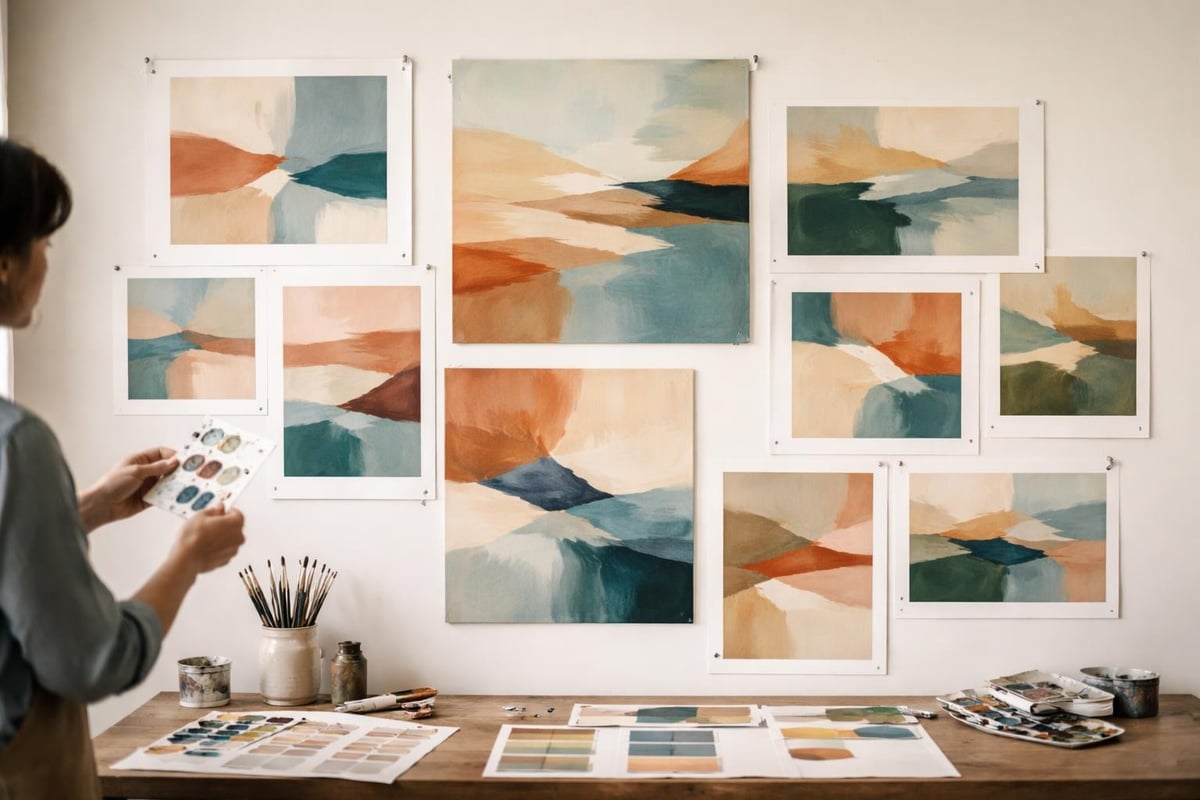
The chromatic studies approach demonstrates how focused exploration of color and geometry can generate extensive bodies of related work, each piece contributing unique insights while participating in collective investigation.
Educational Value and Artistic Growth
Creating art with art offers significant educational benefits for developing artists. The practice builds essential skills while encouraging deeper engagement with artistic concepts and processes.
Skill Development Through Repetition and Variation
Working in series provides opportunities for focused skill development that isolated pieces cannot match. Artists refine techniques through repetition while variations prevent mechanical reproduction and encourage continued growth.
This approach develops:
- Technical proficiency through repeated execution of similar processes
- Problem-solving abilities as artists address recurring challenges in different contexts
- Aesthetic judgment through comparing multiple approaches to similar subjects
- Conceptual depth by exploring ideas beyond surface-level engagement
Learning from Artistic Ancestors and Contemporaries
Engaging with other artworks through responsive creation provides education that studying alone cannot deliver. Artists develop understanding through active making rather than passive observation.
This learning manifests through:
Close observation: Creating responses requires careful study of source works, revealing subtleties easily overlooked in casual viewing.
Technical analysis: Understanding how other artists achieve specific effects informs one's own practice and expands technical vocabulary.
Conceptual exploration: Investigating why artists make particular choices deepens appreciation for the decision-making inherent in all creative work.
Historical awareness: Connecting current practice to broader traditions situates individual work within meaningful contexts.
Resources like ArtRAG demonstrate how structured approaches to artwork analysis can enhance understanding and generate new perspectives on creative practice.
Marketing and Presenting Cohesive Bodies of Work
Artists creating art with art must develop presentation and marketing strategies that effectively communicate the relationships between works. These approaches differ significantly from strategies for promoting individual, unrelated pieces.
Digital Presentation Strategies
Online platforms require particular attention to how related works appear together. Effective digital presentation includes:
- Gallery views showing multiple pieces together to reveal patterns and variations
- Detail shots highlighting specific elements that recur or evolve across works
- Installation examples demonstrating how pieces function in actual spaces
- Process documentation revealing how series develop from concept through completion
- Comparison tools allowing viewers to examine pieces side-by-side
The collections overview format enables viewers to explore how thematic groupings create coherent artistic statements across varied works.
Communicating Value Through Context
Collectors and viewers better appreciate related artworks when they understand the connections and intentions behind them. Effective communication strategies include:
Artist statements that explain conceptual frameworks without over-determining interpretation. These should illuminate thinking without prescribing specific readings.
Series descriptions identifying common elements and intentional variations across related works. Clear communication helps viewers recognize patterns they might otherwise miss.
Installation guidance suggesting effective arrangements while respecting collector autonomy. Recommendations demonstrate thoughtfulness without limiting creative display options.
Process insights sharing how series develop over time, including dead ends and breakthroughs. Transparency about creative process builds connections with audiences interested in artistic practice.
Creating art with art represents a sophisticated approach to artistic practice that honors tradition while embracing contemporary possibilities. Through intentional development of related works, artists build layered dialogues that deepen viewer engagement and demonstrate conceptual commitment. Whether you're drawn to chromatic explorations, geometric investigations, or thematic series, Nathalie Chikhi offers original artworks and prints that exemplify how individual pieces can participate in larger artistic conversations, inviting you to discover collections that speak to your aesthetic sensibilities and space.
